






Key Points
- India's data centre capacity projected to grow from 1.5 GW to 6.5 GW by 2030
- Expansion expected to create one lakh engineering jobs in AI and infrastructure
- National Quantum Mission crosses 1,000 km of secure communication infrastructure
India‘s expanding data centre sector is expected to generate nearly one lakh engineering jobs by 2030, with the country’s installed capacity projected to grow from 1.5 gigawatts to 6.5 gigawatts over the same period, Union minister Jitendra Singh said on Friday.
The jobs will emerge in areas including artificial intelligence systems, cooling technologies, smart grids, renewable energy integration and digital infrastructure, according to the minister. A gigawatt of data centre capacity typically represents a facility capable of powering approximately one million servers simultaneously.




By the numbers
Key figures from this story- 6.5 GW
- India's projected data centre capacity by 2030
- 1 lakh
- Engineering jobs expected from data centre expansion
- 1,000 km
- Quantum communication infrastructure completed
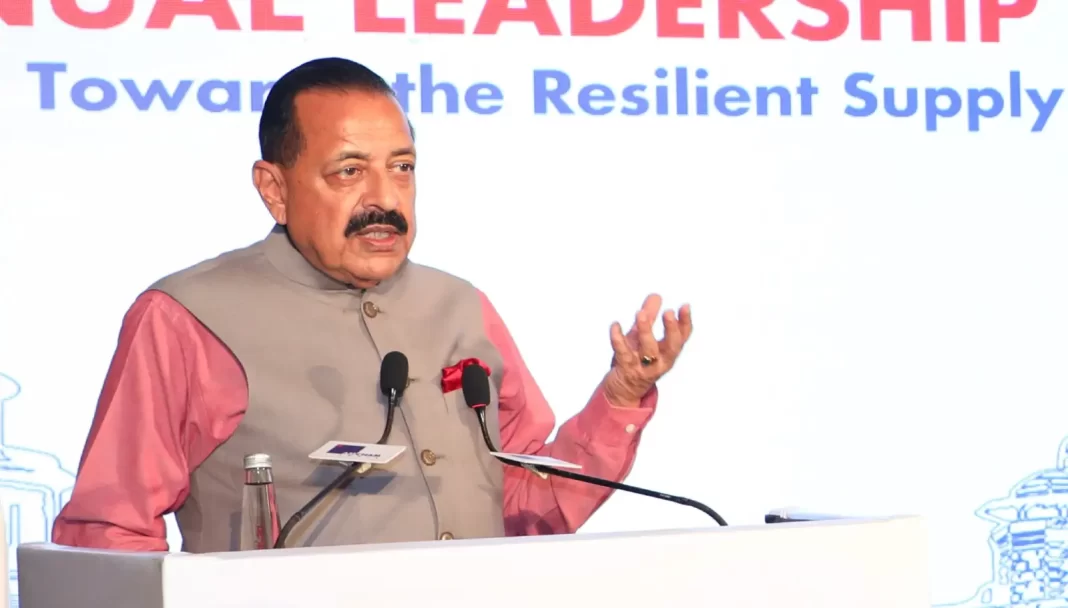
Speaking at the Annual Leadership Summit organised by the American Chamber of Commerce in India (AMCHAM), Singh described data centres as the “next oil economy” and said the future would increasingly revolve around data control, digital infrastructure and secure technology ecosystems.
Government Push for Data Centre Hub Status
The government is positioning India as a global data centre hub through policy reforms, private sector participation and clean energy integration, Singh said. The minister argued that India must adopt an integrated national approach involving government, private industry, infrastructure providers, telecom networks, renewable energy stakeholders and research institutions.
The push comes as hyperscale data centres — facilities operated by large technology companies that can scale rapidly to meet demand — and colocation markets expand globally. Colocation refers to facilities where multiple companies rent space to house their servers and networking equipment under shared infrastructure.
“India can no longer view the data economy merely as a technological transition, but as a strategic national opportunity that will influence investments, employment, energy systems and geopolitical competitiveness in the decades ahead,” Singh said.
Technology Partnerships and Frontier Sectors
The minister claimed that the world now increasingly looks towards India for technology partnerships, asserting that India stands at the same level of technological progression as leading nations in several frontier sectors.
Singh cited the National Quantum Mission as evidence, stating that India has achieved more than half of its planned targets in less than half the stipulated time. Against a target of establishing 2,000 kilometres of secure quantum communication infrastructure over eight years, India has crossed 1,000 kilometres within three years, according to the minister.
India’s technology ecosystem driven by AI, 6G telecommunications, semiconductors and digital public infrastructure is creating opportunities for global investments and collaboration, Singh added.
Policy Reforms Supporting Growth
The government has introduced several policy measures to attract data centre investment and technology development. These include long-term tax incentives for foreign cloud service providers, the National Research Foundation, the Semiconductor Mission and the opening of sectors such as space and nuclear energy to private participation.
Singh said many of these reforms were considered unimaginable a few years ago but demonstrated the political will to move in areas critical to future economic growth.
The data centre sector’s growth trajectory depends on resilient supply chains, sustainable energy systems, advanced telecom connectivity and subsea cable infrastructure, the minister noted. India currently has multiple operational subsea cable landing points connecting it to global internet infrastructure, with additional cables under construction or planned.
The government is positioning itself as a facilitator rather than sole driver of technology development, with frameworks designed to accelerate industry participation in deep-tech research and digital infrastructure, Singh said.
Your Questions, Answered
How many jobs will India's data centre sector create by 2030?
The government projects nearly one lakh engineering jobs in areas including AI systems, cooling technologies, smart grids, renewable energy integration and advanced digital infrastructure.
What is India's projected data centre capacity by 2030?
India's data centre capacity is projected to grow from 1.5 gigawatts to approximately 6.5 gigawatts by 2030, according to government projections cited by Union minister Jitendra Singh.
What is the National Quantum Mission's progress?
Against a target of 2,000 kilometres of secure quantum communication infrastructure over eight years, India has crossed 1,000 kilometres within three years, according to the government.
What government policies support data centre growth in India?
Key policies include long-term tax incentives for foreign cloud providers, the National Research Foundation, the Semiconductor Mission and opening space and nuclear energy sectors to private participation.


