





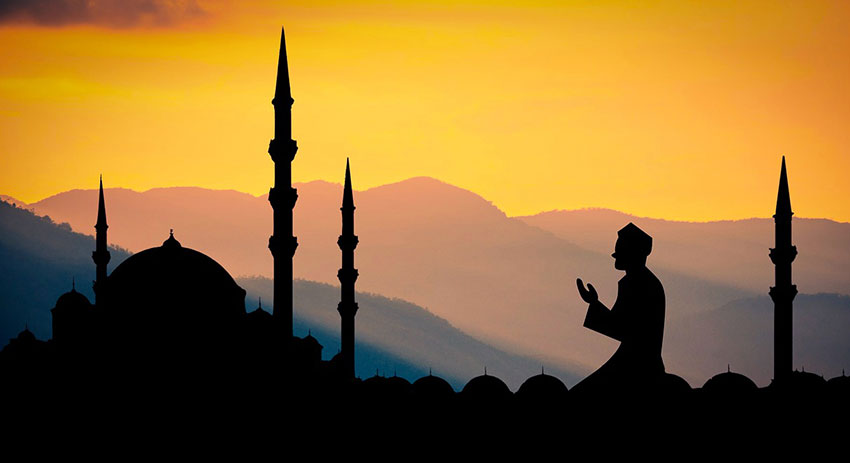

Fasting in one form or the other does exist in almost all the religions. We witness “Navaratra Fasting” for nine days among Hindus. Similarly, Hindu women also fast for a day – “Karwa Chouth” for the well being of their husbands. The Christians (Catholics) do have 40 days fast but it is not mandatory, but fasting on ‘Ash-Wednesday (beginning of Eastern Season of fasting and abstinence) and ‘Good Friday’ are mandatory except sick and pregnant women. However, fasting or Roza as practiced by Muslims is an elaborate process stretching over a period of one month every year. Why do they do it? The common answer is that the holy book “The Qur’an” ordains it
When one analyses the reasons for prescribing fasting to Muslims, one comes across a number of them. First, the fasting is prescribed because it serves as a means to sharpen our awareness of God and seek forgiveness. Secondly, the fasting makes a person feel pawns of hunger which poor people taste regularly. Thirdly it induces a person to practice the concept of Charity and neighbourhood. Finally, the fasting is prescribed to strengthen self-control and make speaking truth a permanent habit.
Perhaps one needs to experience Ramadan to understand it. As Michael Wolfe in his column “Armoring the Heart” after experiencing it puts it so eloquently – “My first Ramadan fasting taught me self-control and empathy” perhaps rightly experienced the virtues of Ramadan and expressed them in following words, “From feelings deprived, you come to feel empowered by your ability to shake off the promptings of appetite. From thinking how slowly the time is passing, you move along, as the fast progresses to not watching the clock. You may take a larger interest in the minutes right around sunset, but the rest of the day drifts along, once you are in the swing and time as a social habit loses some of its importance. Indeed, Ramadan stands time on its head’”. What an expression of first Ramadan fasting experience. In its totality, it is an elaborate process of self-purification, self-control which also increases social sensitiveness towards human concerns.



I firmly believe that this month-long process is the best instrument to mold the behavioural pattern of life of its practitioners in such a way that they turn out to be an ideal human being. It essentially means that a person observing fast will not only observe abstinence from eating and drinking but will get into a sublime state of mind in order to develop positive feelings. In order to achieve this one has to restrain oneself from listening, speaking, hearing or thinking negatively about others. The expectation is that if one applies such a restraint and passes through this process of self-purification for a period of one month, its impact will at least last for the remaining 11 months when this process will be again repeated. Unfortunately, we take it as physical fasting only and do not achieve what is expected of this great month of significance.
The other areas of significance expected to be developed and addressed during this holy month include helping the poor through alms, charity and practice the concept of neighbourhood and hospitality. Apart from helping to purify body and soul through this process of self-purification, addressing these areas of social significance are bound to help people to shed all those things, which are not socially desirable. A Muslim is also expected to take stock of his personal wealth both cash and kind and calculate ‘zakat’ @ about 2.5%, which is to be earmarked for distribution among the poor and needy. In return, God is expected to safeguard his wealth and property. What a wonderful scheme to bring about social justice. If all the rich and well to do Muslim families practice this with full sincerity, there will be few dying of hunger in the colonies inhabited by desperately poor people. Since the Muslims try to practice good things to receive forgiveness from God, there cannot be better motivation than this to achieve the same.
One of the greatest advantages of fasting in this month is that “its true observance is expected to inculcate in a person a habit of speaking the truth”. It is well accepted that to tread the path of truthfulness is to tread the path of the most righteous of God’s creation. Truthfulness is expected to be an essential attribute of every Muslim. If a person undergoes through this process of self-purification, speaks the truth, practices the concept of hospitality and neighborhood and gives charity as prescribed, he/she will not only become an ideal human being (Insan), but will certainly be also entitled for God’s blessings and protection which all of us so desperately need in these turbulent times.
Prof. M. Aslam is a Social Scientist, a former Vice Chancellor of IGNOU and can be reached at profaslam10@gmail.com


