






As we embark on 2024, the defence technology (DefTech) landscape is witnessing an intriguing confluence of advancements and ethical challenges. This transformation is not only reshaping defence capabilities but also raising critical questions about the future of warfare and security.
Nations like Russia and Israel are at the forefront of leveraging advanced technologies, while Ukraine and Gaza find themselves predominantly on the receiving end. So we take a look at the five key trends in the DefTech sector, acknowledging both their potential benefits and inherent complexities.
Edges of AI in Cybersecurity




Artificial Intelligence (AI) is increasingly prominent in cybersecurity, automating and enhancing threat detection and response. However, this advancement is a double-edged sword. While AI streamlines defence mechanisms, it also opens new avenues for cyber threats, necessitating a careful balance between leveraging AI’s benefits and guarding against its potential for misuse.
Digital Transformation in Aerospace and Defence (A&D)
The A&D sector is undergoing a significant digital transformation. Driven by heightened demand and challenges like supply chain disruptions, digitalisation is enhancing efficiency across product development and supply management. This shift promises innovation but also requires careful management of resources and talent.
Emerging Military Technologies
Several technologies are rising to prominence in the military sector:
- Robotics and Autonomous Systems: These technologies are transforming military operations, increasing efficiency while reducing human risk.
- Cyber Warfare: As digital dependency grows, so does the importance of cyber warfare capabilities, both offensive and defensive.
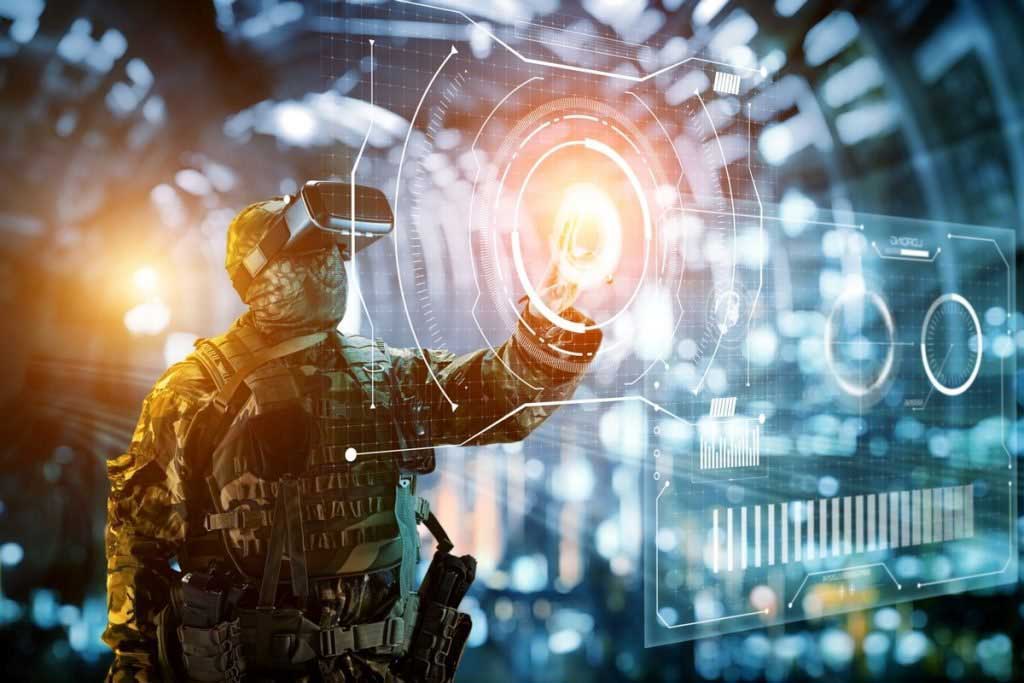
- Immersive Technologies: Virtual and augmented reality are revolutionising training, offering realistic and cost-effective solutions.
Space-based Defence Systems
The increasing use of space for defence, including satellite defence and anti-satellite capabilities, reflects the expanding battlefield. These systems are vital for modern warfare but also escalate the militarisation of space, a domain previously regarded as a global commons.
Biotechnology in Soldier Enhancement
Biotechnology is being leveraged to augment the capabilities of soldiers through developments like exoskeletons and health monitoring devices. This trend is notable for its potential to create “super-soldiers,” yet it also raises ethical questions about the future of human involvement in warfare.
As we delve into these trends, it’s imperative to recognise that technological advancements in defence bring both opportunities and challenges. The integration of these technologies into military strategies promises enhanced capabilities and efficiencies. However, it also necessitates a heightened sense of responsibility regarding their deployment and potential consequences.
The future of DefTech is not merely about innovation for superiority’s sake. It calls for a judicious approach where the pursuit of advanced capabilities is balanced with ethical considerations and global stability.
In navigating this intricate landscape, the defence sector must remain vigilant, ensuring that technological progress aligns with broader values of security, peace, and responsible conduct in an increasingly complex world.


