India’s technology and business leaders marked AI Appreciation Day 2026 by shifting the debate away from the novelty of generative AI towards a harder question: what has the technology actually delivered for companies, workers and public services?
Across sectors, executives said artificial intelligence was moving into everyday operations, helping banks improve efficiency, power utilities predict failures, healthcare providers support clinical decisions, travel companies personalise services and small businesses simplify accounting and compliance. The Karnataka government also announced plans for what it described as India’s first and largest government-led AI university in Bengaluru, alongside an AI hub, a state AI policy and AI education from Class VI.
The emerging message was that the next phase of adoption would be judged less by the sophistication of models and more by measurable outcomes, trusted data and accountable deployment. Leaders from Thales, NetApp India, Philips, Turnitin and other companies said security, transparency, human oversight and data governance would determine whether AI could be used safely at scale.
Workforce impact remained a central concern. Executives said AI was increasingly automating repetitive work and accelerating decision-making, but argued that hiring, healthcare, education and other sensitive areas should continue to rely on human judgement. A study released ahead of the day said more than seven in 10 young Indians had used AI for career advice, while privacy, inaccurate information and overdependence remained key concerns.
The discussion also reflected a wider change in corporate priorities. Businesses that spent the past two years testing chatbots and pilot projects are now under pressure to demonstrate productivity gains, lower costs, stronger customer service and better risk management.
At Tech Observer Magazine, our reporters are tracking announcements, research findings and reactions from technology leaders, CIOs, CISOs, CTOs, founders and AI practitioners through the day as India assesses where artificial intelligence is producing real value and where its risks still require stronger safeguards.
- AI Appreciation Day is observed annually on 16 July to recognise advances and encourage discussion on responsible AI adoption.
- Enterprise AI is shifting from experimentation towards measurable business outcomes, governance and large-scale deployment across industries.
- Karnataka announces India's first government-led AI University.
- Hindware says the next phase of AI will be "invisible", powering smarter customer and dealer interactions.
- STL says rising AI workloads are accelerating demand for high-performance, low-latency and energy-efficient data centre infrastructure.
- Technology leaders across sectors are outlining how AI is transforming healthcare, manufacturing, cybersecurity and enterprise operations.
Meta, Anthropic in talks over potential $10 billion AI compute deal
Meta Platforms and Anthropic are in preliminary discussions over an agreement under which the Claude developer could lease computing capacity from Meta. The potential arrangement could be worth up to $10 billion over two years, although no final agreement has been reached. A deal would signal Meta’s possible expansion into AI cloud infrastructure while highlighting the shortage of computing capacity faced by frontier-model developers.

China’s Moonshot unveils Kimi K3 as competition with US AI companies intensifies
Chinese startup Moonshot AI has released Kimi K3, a 2.8 trillion-parameter open-weight model designed for coding, reasoning and knowledge-intensive tasks. Independent evaluation platforms have placed the model close to, and in some categories ahead of, leading systems from OpenAI and Anthropic. The release provides further evidence that Chinese developers are narrowing the performance gap while offering models at lower operating costs.

China challenges US influence with new global AI cooperation body
China is seeking a larger role in setting global rules for artificial intelligence, with President Xi Jinping promoting open-weight technology and wider AI access for developing countries at the World Artificial Intelligence Conference in Shanghai. The China-backed World AI Cooperation Organisation has secured 29 founding countries, creating a competing framework to US-led efforts on AI governance, infrastructure and supply chains.

How AI will redefine human collaboration: Zoom CEO Eric Yuan
Zoom Eric S. Yuan writes: Fifteen years ago, Zoom was a bet that simplicity and human connection could win. That bet paid off because of the people who believed in it: our team, our customers, and the millions of people around the world who trusted us to keep them connected when it mattered most.
Now we are entering a new chapter. The question is no longer whether AI will transform work. It is whether we will continue to build it in a way that makes work not only easier, but more human and enjoyable.
I do not know exactly what the next 15 years will look like. But I know how we will approach them: with curiosity, with humility, and with the same belief that got us here. If you build something people love, and you never stop listening, the best is always yet to come.

Responsible AI can expand credit access while improving lending and fraud detection: Nirmal Kumar, CRO, Axio
Artificial intelligence is becoming a central part of business strategy across financial services, helping lenders improve credit decisions, strengthen fraud detection and provide more personalised customer experiences, according to Nirmal Kumar, Chief Credit Officer, axio.
Kumar said AI was also enabling financial institutions to serve individuals and communities that had previously been overlooked by conventional credit assessment systems.
“Across enterprises, one of the biggest shifts has been embedding AI at the core of business strategy,” he said on AI Appreciation Day 2026.
In financial services, the use of data-driven models can help lenders assess risk more effectively and respond to customers with greater speed and precision. However, Kumar said the expansion of AI in a highly regulated sector required companies to ensure that automated decisions remained transparent, reliable and compliant with regulatory requirements.
Financial institutions must develop strong governance frameworks, explainable AI systems and robust data security controls as they deploy the technology across lending and other critical operations, he said.
“Companies are investing seriously in ensuring AI decisions remain transparent and reliable,” Kumar said. “In a highly regulated industry such as financial services, this requires strong governance, explainable systems, robust data security and compliance with regulatory standards.”
He said responsible use of AI could help make financial services more inclusive and better aligned with the circumstances and requirements of individual customers.
“At axio, we believe responsible AI has the potential to make finance considerably more inclusive and more attuned to individual customer needs,” Kumar said.
Combining advanced technology with data-driven insights and industry expertise could help narrow the credit access gap and give individuals better tools to make informed financial decisions, he added.

Deepfacts founder says AI can widen access to preventive healthcare
Artificial intelligence could help healthcare providers interpret complex medical information and extend specialist support beyond traditional clinical settings, Vamsi Karatam, Founder and CEO, Deepfacts, said on AI Appreciation Day.
Karatam said AI-supported remote monitoring and screening could enable earlier, better-informed decisions while helping clinicians manage growing volumes of healthcare data.
“The true value of AI lies in its ability to support medical expertise, making complex healthcare information easier to interpret and enabling timely, informed decisions,” he said.
He said the technology should augment clinical knowledge rather than operate independently, with accuracy, responsible deployment and patient outcomes remaining central to its use.
AI’s impact in healthcare would ultimately be measured by its ability to strengthen human expertise and make preventive and proactive care more accessible, Karatam added.
Nearly eight in 10 organisations report AI security incidents, DigiCert research finds
Rapid artificial intelligence adoption is outpacing the controls needed to secure and explain the technology, according to research cited by Jason Sabin, Chief Technology Officer, DigiCert.
The July 7 study found that nearly eight in 10 organisations had experienced an AI-related security incident or vulnerability, while almost half lacked complete visibility into how their AI systems reached decisions.
The findings point to a growing trust gap as businesses integrate AI into applications, workflows and decision-making processes. Sabin said organisations would need stronger identity controls, governance and accountability alongside investment in new AI capabilities.
“The AI adoption story has already been told. The next chapter is about trust,” Sabin said. “The organizations that succeed with AI will be those that invest not only in innovation, but in the identity, governance, and accountability that make AI trustworthy.”

AI gains will depend on purposeful workplace use: PeopleStrong
Companies are unlikely to gain lasting advantage simply by deploying more artificial intelligence tools, with value depending instead on whether the technology improves work and employee decision-making, Mrigank Tripathi, President – Growth, PeopleStrong, said on AI Appreciation Day.
Tripathi said AI should be used to reduce repetitive work, support managers and give employees more time for learning, creativity and complex problem-solving.
“The organisations that will truly benefit from AI won't necessarily be the ones using the most technology, but those using it with purpose to unlock human potential, foster continuous learning, and build workplaces where people and technology grow together.”
He said the future of work would be shaped by collaboration between employees and AI, rather than by replacing human roles with automation.
At the workplace, AI could also help create more personalised employee experiences and improve managerial decisions, while organisations retain people at the centre of how the technology is designed and used, Tripathi added.

Oracle India says AI is moving into everyday enterprise workflows
Artificial intelligence is becoming embedded in the software used by finance, human resources and supply chain teams, marking a shift from isolated experiments to deployment across everyday business operations, Shailesh Singla, Vice President, Cloud Applications, Oracle India, said on AI Appreciation Day.
Singla said some of the most effective uses of AI may be largely invisible to employees because they operate within existing applications and workflows rather than as standalone tools.
“Today, the conversation has shifted to delivering meaningful business outcomes at scale,” Singla said.
He cited financial forecasting, talent management and supply chain planning as areas where embedded AI could help employees make decisions more quickly and focus on higher-value work.
“As AI becomes native to enterprise applications, it's doing more than automating tasks. It's helping people make smarter decisions, work more efficiently, and focus on higher-value work,” he said.
Singla added that the wider impact of enterprise AI would depend on how effectively intelligence is integrated into the routine work of different business functions.
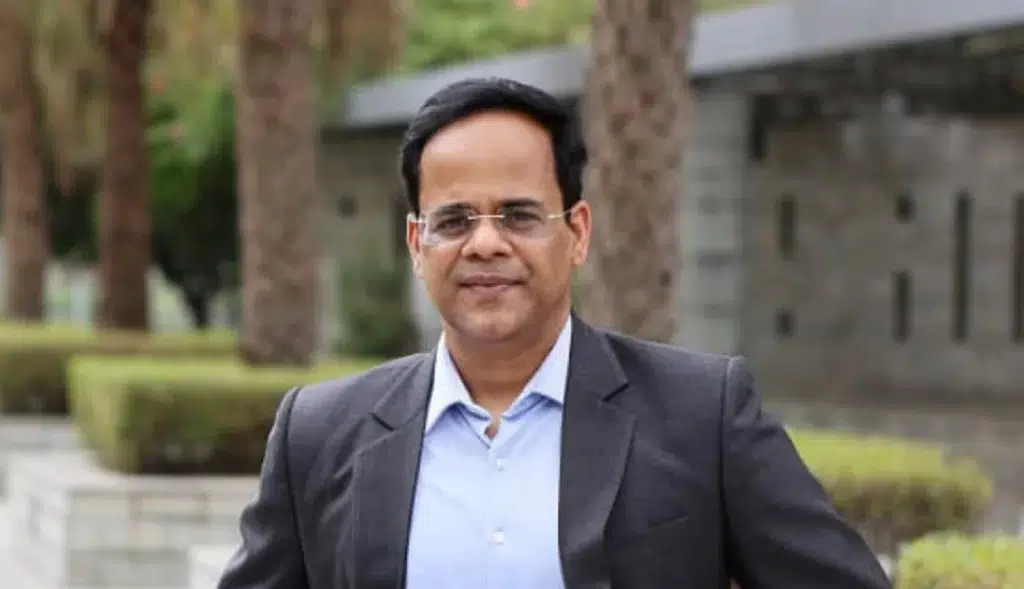
AI infrastructure, not models, will decide enterprise returns: Techno Digital
Predictive maintenance, faster security response and automated document processing are emerging as more meaningful tests of enterprise AI than advances in model performance, Amit Agrawal, President, Techno Digital, said on AI Appreciation Day.
Agrawal said some of the most valuable deployments were delivering practical operational gains, including a 30–50% reduction in unplanned downtime through predictive maintenance and a 40–60% acceleration in onboarding through intelligent document processing. The figures were cited by him as examples of outcomes being achieved through production AI systems.
“AI Appreciation Day shouldn’t be about applauding models; it should be about recognizing the people, infrastructure and operational discipline that turn them into reliable business outcomes.”
Such results require more than capable models, Agrawal said, pointing to high-performance computing, low-latency inference, resilient power, secure connectivity and clearly defined operating procedures.
He said this infrastructure discipline was increasingly separating AI pilots from deployments capable of operating reliably at enterprise scale.
“The next competitive advantage won’t be defined by model accuracy alone; it will belong to organizations that can consistently deliver trusted, low-latency, measurable business outcomes at scale.”

F5 India chief says APIs and security will determine production AI performance
As companies move artificial intelligence applications into production, performance and security will increasingly depend on the infrastructure managing APIs, inference traffic and access to enterprise data, Dhananjay Ganjoo, Managing Director for India and SAARC, F5, said on AI Appreciation Day.
Ganjoo said delays, outages or security weaknesses in these layers could affect the reliability of AI-enabled business services even when the underlying models perform well.
“Keeping these AI applications fast, resilient, and secure requires more than powerful models it requires an application delivery and security architecture purpose-built for AI.”
APIs connect AI models with business applications and data, while AI gateways can inspect prompts, govern model interactions and apply controls during use, he said.
Ganjoo added that organisations would also need safeguards against risks including prompt injection, API abuse and data leakage as AI workloads expand.
“At F5, we see application delivery and security as the foundation for production AI, enabling organisations to confidently deploy and scale AI applications without compromising performance, resilience, or security.”

AI advantage will come from enterprise foundations: Table Space CTO
Companies may gain little lasting advantage from artificial intelligence models alone unless they have the technology infrastructure, data and operational knowledge needed to put them to work, Ashwin Chandrasekar, Chief Information and Technology Officer, Table Space, said on AI Appreciation Day.
Chandrasekar said AI was allowing businesses to derive greater value from years of investment in technology and enterprise data by bringing them together through a common intelligence layer.
“As this capability matures, lasting advantage will depend less on the models themselves and more on the strength of the technology foundation and enterprise-specific context beneath them.”
His comments reflect a broader shift in enterprise AI, where the ability to integrate models with internal systems, business processes and proprietary data is becoming more important than access to the models themselves.

Voice AI is becoming core enterprise infrastructure: Krisp
Voice artificial intelligence is moving from a supplementary workplace tool to part of the infrastructure supporting customer service, hybrid work and distributed teams, Vimal Nair, Chief Growth Officer, Krisp, said on AI Appreciation Day.
As companies rely more heavily on real-time communication across markets, AI is increasingly being embedded into existing workflows to improve call quality, capture meeting information and reduce communication barriers, Nair said.
“Voice AI has evolved from a nice-to-have to an essential part of enterprise operations,” he said.
Krisp’s technology processes more than one billion minutes of voice conversations each month, according to Nair, with applications including background-noise removal, automated meeting notes and real-time accent conversion for customer support teams.
“As enterprises move from experimenting with AI to relying on it for everyday operations, the next phase will be defined by AI that enhances communication, strengthens security, and integrates seamlessly into the workflows teams already use,” Nair said.

India’s AI ambitions hinge on power and data centre build-out: Colt DCS chief
India’s ability to compete in the global artificial intelligence economy will depend as much on power, computing capacity and data centres as on advances in AI models, Pratap Mane, President and Country Head – India at Colt DCS, said on AI Appreciation Day.
“The global race for AI leadership will not be won by algorithms alone. It will be won by countries that can build the digital infrastructure capable of supporting AI at scale,” Mane said.
As businesses move from experimentation to enterprise-wide AI deployment, access to resilient power, scalable compute, high-performance connectivity and sustainable infrastructure is becoming a factor in investment and expansion decisions, he said.
Mane cited estimates showing India’s operational data centre capacity rising from about 375 megawatts in 2020 to nearly 1.5 gigawatts, with capacity expected to exceed 4 gigawatts by 2030.
However, meeting growing demand will require coordinated planning between governments, utilities, infrastructure developers and technology companies, particularly around power availability, connectivity, land, approvals and sustainability, he said.
“If AI is to become a cornerstone of India’s economic future, then building world-class digital infrastructure must be treated not merely as an industry priority, but as a national imperative.”

iLink Digital CTO says AI success hinges on data, cloud and application foundations
Enterprises are moving beyond AI experiments, but scaling the technology will depend more on their underlying data and technology infrastructure than on access to the latest models, Ritesh Kapadia, Field Chief Technology Officer at iLink Digital, said on AI Appreciation Day.
Kapadia said the debate had shifted from whether companies should adopt artificial intelligence to how they could deploy it securely, responsibly and at scale.
“As AI moves from experimentation to execution, success will depend less on having the latest models and more on having the right data, cloud, and application foundations to operationalise it,” he said.
He said organisations should assess AI investments by their ability to address business problems, improve decision-making and produce measurable results rather than by the sophistication of the technology alone.
“At iLink Digital, we believe AI creates value only when it solves real business problems, improves decision-making, and delivers measurable outcomes,” Kapadia said.
The long-term value of AI, he added, would be determined by its impact on businesses and the people they serve.