






Russian domestic technology enterprises including state-owned gas giant Gazprom are capitalising on the embargo and departure of global internet companies, finding opportunities in Russia’s rising digital isolation, said a Reuters report.
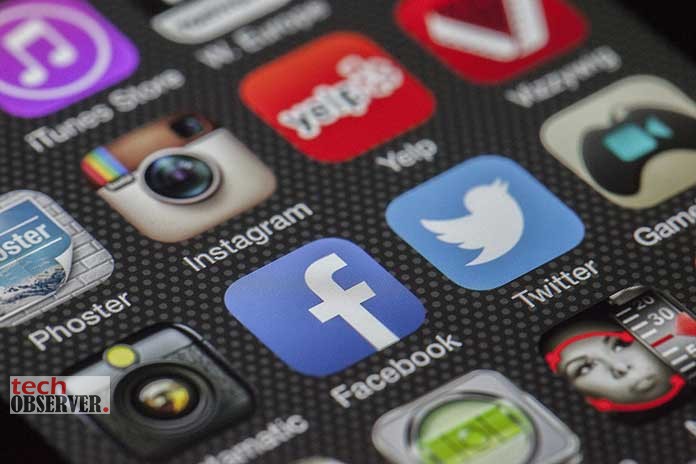
According to analysis, Russia has banned access to Twitter and Meta Platforms’ flagships Facebook and Instagram since the Ukraine war began on Feb. 24, as the country’s long-running feud with Big Tech deteriorates into a struggle for information control.
The analysis said that the digital exodus sparked by Western sanctions and a crackdown by Russian media regulators have created space for domestic players, with VK, which operates the country’s most popular social networking site VKontakte, spearheading the drive. On Thursday, it published a step-by-step guidance for organisations considering a platform migration.



Considered for years to be Russia’s answer to Facebook, VKontakte now has an average of more than 50 million daily active members and reaches 80% of Russia’s monthly online population, the business said.
This far exceeds Facebook’s estimated 7.5 million users in Russia last year, according to researcher Insider Intelligence, reported news agency Reuters.
In March, VKontakte said that more than 585,000 new company owners started their own communities on the network, ranging from hair salons to clothing stores.
VKontakte has set new records for user activity since Russia launched a “special operation” to demilitarise its neighbour, with an 11 per cent increase in content volumes on the network between February 24 and March 24, according to monitor Brand Analytics.
According to the monitor, the volume of Russian-language content produced on Twitter, Facebook, and Instagram decreased by 5%, 16%, and 30%, respectively, over that time period.
Vkontakte generates revenue through advertisements, commissions from app developers, and user purchases for subscriptions and one-time payments. Last year, the firm generated 125.8 billion roubles ($1.5 billion) in revenue.
Other divisions of VK include email service mail.ru and gaming division MY.
“The domestic market for interactive services now has a great chance to show its potential to its audience,” Anton Gorelkin, a member of Russia’s State Duma Committee on information and communications, told the Telesputnik media outlet in late March. “Russian users don’t just have an alternative, they have a choice.”
While there is no explicit policy aimed at displacing foreign social networking platforms, the government has promised income tax advantages and favourable financing to IT firms, as well as postponed military duty for employees. Additionally, politicians are urging people to switch to domestic carriers.
The government may also be indirectly involved in the country’s technological destiny via a convoluted network of investments including Gazprom and its media division.
Gazprom Media acquired a sizable portion of VK’s voting rights in December as part of an expanding media empire controlled by the state energy behemoth.
Following a stumble, its investments may quickly pay off. VK’s London-listed shares were banned in early March after plummeting to near-zero levels as Western investors fled Russian assets.
When VK’s depositary receipts started trading in Moscow on Wednesday following a more than month-long suspension, they surged 72 per cent in one session from record lows, which analysts attributed to decreased foreign competition.
Gazprom Media purchased RuTube in late 2020, a video-hosting platform that bears a remarkable resemblance to Alphabet’s YouTube and whose weekly user count increased by 5.5 times in early March, TASS said.
These figures could increase further as YouTube faces pressure from Russia’s official communications regulator Roskomnadzor and may soon follow Facebook, Instagram, and Twitter in succumbing to the same fate.
RuTube had 17.7 million unique monthly users at the end of December, according to Gazprom Media’s Deputy CEO Alexander Moiseev in February. This compares to Mediascope’s estimate of 89.5 million YouTube users in Russia in January 2022.
Other domestic alternatives to prominent international services have lately appeared. Gazprom Media launched Yappy in November as a competitor to TikTok, which recently ceased live streaming and new video uploads in Russia.
Yappy has been installed by approximately 3.2 million users in Russia since its inception, compared to more than 10 million for TikTok, according to estimates from tracker Sensor Tower as of March 27.
Rossgram, a name, design, and colour scheme rip-off of Instagram was due to start this week, but its founders only managed to share a video of a prototype hours after the stated launch time.
Several creators announced the development of ‘Grustnogram‘, or ‘Sadgram’ in English, a black-and-white, sad alternative to the popular photo-sharing platform in the United States. Others are developing an alternative to Google Play.
Another service that Gorelkin and other government officials have championed in recent weeks is Telegram, which appears to be rebounding after a tumultuous relationship with the Russian state, which attempted but failed to block it in 2018.
Pavel Durov, the founder of Telegram, was also the brains behind VKontakte, but fled Russia in 2014 after the platform was taken over by Kremlin sympathisers.
Telegram claims that it’s over 500 million global users produce over 500 billion views every month in one-to-many channels. It enables the placement of sponsored messages containing related content on public channels. Already enormously popular in Russia, the platform would benefit from any WhatsApp user exodus.
WhatsApp, which was used by around 67 million people in Russia last year, remains available for the time being, according to Insider Intelligence estimates.
(With Reuters input)


