






Key Points
- Chandigarh and Dadra & Nagar Haveli become first territories to operationalise CBDC food subsidy for all beneficiaries
- Food subsidy transferred directly to digital rupee wallets instead of bank accounts
- Initiative builds on pilots launched in Gujarat and Puducherry in February 2026
The Centre on Friday (14 August) launched a Central Bank Digital Currency (CBDC) based direct benefit transfer system for food subsidies under the Pradhan Mantri Garib Kalyan Anna Yojana (PMGKAY) in Chandigarh and Dadra & Nagar Haveli, making these the first territories to operationalise digital rupee transfers for the country’s largest food security programme.
Under the new system, the food subsidy amount is transferred directly into a beneficiary’s digital rupee wallet, a government-backed digital currency account maintained by the Reserve Bank of India, instead of a conventional bank account. Beneficiaries can then use this purpose-bound digital subsidy to purchase foodgrains from empanelled merchants through QR code payments on smartphones or OTP-based mechanisms on feature phones.

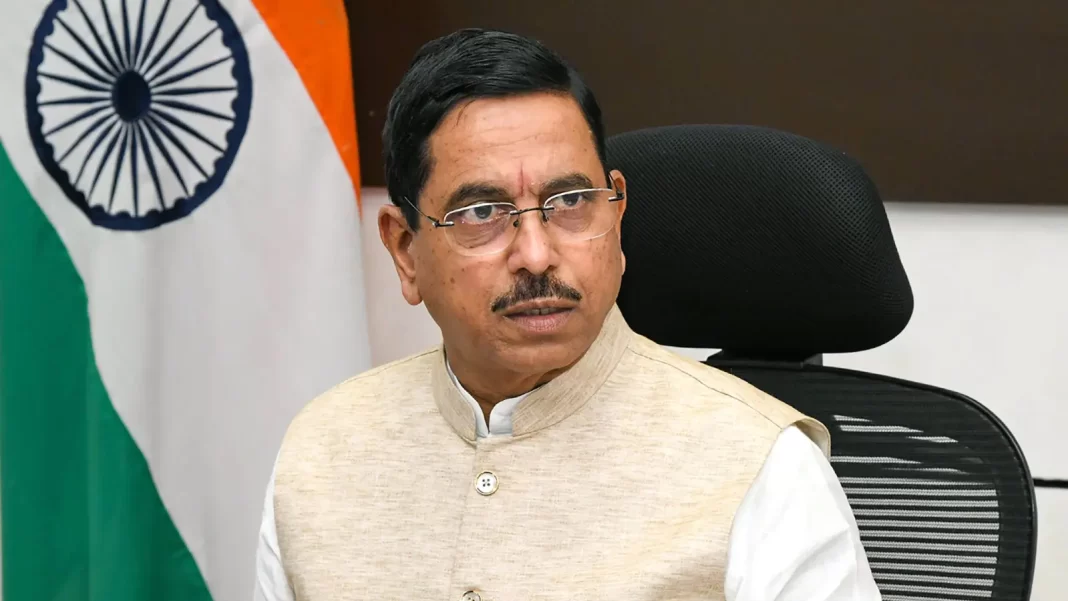
Pralhad Joshi, Union minister for Consumer Affairs, Food and Public Distribution, inaugurated the programme alongside Gulab Chand Kataria, Governor of Punjab and Administrator of Chandigarh, and Shivraj Singh Chouhan, Union minister for Rural Development and Agriculture.
“Today marks a significant step in the digitalisation of the world’s largest food security programme,” Joshi said. “The objective is to ensure that every rupee reaches the eligible beneficiary while middlemen are kept out of the system.”
CBDC – Digital rupee mechanism
The CBDC-based system provides instant transfer of food subsidies with digital transaction records. The purpose-bound nature of the digital currency means the subsidy can only be used for purchasing foodgrains at designated shops, reducing the scope for diversion or misuse. The system aims to reduce dependence on cash withdrawal and handling while enabling real-time monitoring of subsidy utilisation.
Joshi said the broader direct benefit transfer framework has led to savings of over ₹4 lakh crore by reducing leakages and ensuring direct transfer of benefits to intended beneficiaries. He also referenced ASHA, an AI-based solution that makes 20 lakh calls to beneficiaries to collect feedback on food grain quality and whether they received their entitlements.
The initiative builds on earlier pilots conducted in Gujarat and Puducherry. The CBDC-based food subsidy delivery was first piloted in Gujarat on 15 February 2026, followed by Puducherry on 26 February 2026. Drawing on experience from these pilots, the government has now expanded the initiative to cover all eligible beneficiaries in Chandigarh and Dadra & Nagar Haveli.
PDS digitisation foundation
Chouhan said the programmable nature of CBDC, meaning its ability to restrict spending to specific purposes, will help prevent misuse of food subsidies. He suggested expanding the initiative to other parts of the country.
Sanjeev Chopra, secretary, Department of Food and Public Distribution, said CBDC-based direct benefit transfer is the next step in India’s digital financial inclusion journey built on the JAM trinity of Jan Dhan accounts, Aadhaar and mobile phones.
“More than 59 crore Jan Dhan accounts have been opened with deposits exceeding ₹3.10 lakh crore:, he said, adding that UPI processed over 2400 crore transactions worth more than ₹30 lakh crore in July 2026, accounting for nearly 49 per cent of all real-time digital payment transactions globally.
By the numbers
Key figures from this story- ₹4 lakh crore
- DBT savings from reduced leakages
- 80 crore
- PMGKAY beneficiaries receiving free ration
- 59 crore
- Jan Dhan accounts opened
Nimuben Jayantibhai Bambhaniya, minister of state for Consumer Affairs, Food and Public Distribution, said the government provides free ration to more than 80 crore beneficiaries through PMGKAY. She noted that portability through One Nation One Ration Card (ONORC) has made the public distribution system more transparent across states and union territories.
The initiative is positioned as a proof-of-concept for potential nationwide rollout. It is expected to provide operational experience in integrating CBDC with welfare schemes as part of the government’s broader digital public infrastructure efforts.
The rollout builds on existing technology reforms in the public distribution system, including digitisation of ration cards, Aadhaar-based verification, electronic point of sale authentication and online supply chain management.
Your Questions, Answered
How does CBDC-based food subsidy transfer work?
The food subsidy is transferred directly into a beneficiary's digital rupee wallet maintained by the Reserve Bank of India. Beneficiaries can use this purpose-bound digital currency to purchase foodgrains from empanelled merchants through QR code payments on smartphones or OTP-based mechanisms on feature phones.
Which states have piloted CBDC-based food subsidy?
Gujarat piloted the CBDC-based food subsidy delivery on 15 February 2026, followed by Puducherry on 26 February 2026. Chandigarh and Dadra & Nagar Haveli are now the first territories to operationalise it for all eligible beneficiaries.
What is the advantage of CBDC over conventional bank transfers for subsidies?
CBDC enables purpose-bound transfers, meaning the digital currency can only be spent on foodgrains at designated shops. This reduces scope for diversion or misuse, provides real-time transaction records and reduces dependence on cash handling.
How many beneficiaries are covered under PMGKAY?
According to the government, more than 80 crore beneficiaries receive free ration through the Pradhan Mantri Garib Kalyan Anna Yojana, making it the world's largest food security programme.


