






Key Points
- CSAI releases strategic document on telecom security in AI and quantum era
- PM's January 2026 directive cited concerns over snooping on national telecom infrastructure
- Summit draws over 100 senior decision-makers including CISOs and government officials
The Cyber Security Association of India (CSAI) on Thursday (25 June) released a strategic document on securing telecommunications infrastructure against threats from artificial intelligence and quantum computing, presenting actionable recommendations for policymakers, telecom operators and cybersecurity practitioners.
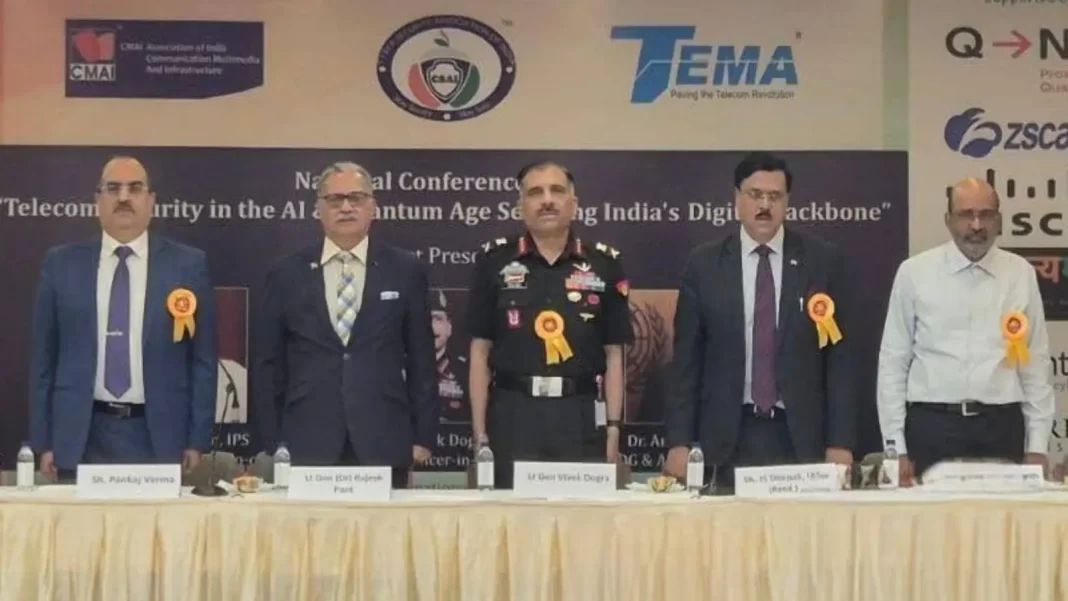
The document was released at CSAI’s national summit on telecom security held at the India International Centre in New Delhi. The event brought together over 100 senior decision-makers including chief information security officers, chief technology officers, telecom service providers, Department of Telecommunications officers and defence representatives.



The summit follows Prime Minister Narendra Modi’s observations during a telecom sector review on 7 January 2026. The PM had noted that in the current geopolitical environment, there are several attempts at bugging or snooping on national telecom infrastructure. He directed the department to establish a mechanism responsible for ensuring the safety of Indian telecom networks.
CSAI chairman Rajesh Pant and former national cyber security coordinator, inaugurated the event. Other dignitaries included Vivek Dogra, signal officer-in-chief; Amit Sharma, additional director general and cyber adviser, Ministry of Defence; Narendra Nath Gangavarapu, joint secretary, National Security Council Secretariat; and JS Deepak, former secretary at DoT.
Quantum-Safe Technologies and Post-Quantum Cryptography
Experts at the summit discussed the need to adopt quantum-safe technologies before quantum computers become capable of breaking current encryption standards. Post-quantum cryptography refers to encryption methods designed to remain secure even against attacks from future quantum computers.
Quantum key distribution (QKD) uses the principles of quantum mechanics to create encryption keys that cannot be intercepted without detection.
The discussions covered 5G and 6G network vulnerabilities, AI-driven security systems that can detect threats in real time, cyber threat intelligence sharing between government and industry, cloud security challenges and regulatory frameworks needed to address these emerging risks.
Speakers emphasised the need for accelerating adoption of quantum-safe technologies, promoting indigenous innovation in cybersecurity, strengthening collaboration between government and private sector, and building a cybersecurity workforce capable of addressing next-generation threats.
The strategic document released at the summit presents specific recommendations for different groups. Policymakers are advised on regulatory changes needed to mandate quantum-safe encryption standards.
Telecom operators receive guidance on securing 5G infrastructure against AI-enabled attacks. Cybersecurity practitioners are given frameworks for implementing QKD and post-quantum cryptographic protocols.
CSAI said it would continue working on policy advocacy, research, awareness and capacity building to advance India’s cybersecurity preparedness against evolving threats to digital communications infrastructure.
Your Questions, Answered
What is the CSAI strategic document on telecom security?
The document released on 25 June 2026 presents actionable recommendations for policymakers, telecom operators and cybersecurity practitioners on securing India's telecommunications infrastructure against threats from AI and quantum computing.
What is post-quantum cryptography?
Post-quantum cryptography refers to encryption methods designed to remain secure even against attacks from future quantum computers, which will be capable of breaking current encryption standards.
What is quantum key distribution?
Quantum key distribution (QKD) uses quantum mechanics principles to create encryption keys that cannot be intercepted without detection, providing a secure method for exchanging cryptographic keys.
Why did PM Modi call for telecom security mechanisms?
During a January 2026 telecom sector review, PM Modi noted concerns over attempts at bugging or snooping on national telecom infrastructure in the current geopolitical environment and directed the department to establish protective mechanisms.


