






Key Points
- VeeamON Mumbai drew over 400 delegates and 50 speakers across enterprise and government sectors
- Saksham Bharat roundtable addressed cyber skilling gap between academic qualifications and workplace readiness
- Evening session brought together more than 30 government and PSU CIOs and CISOs
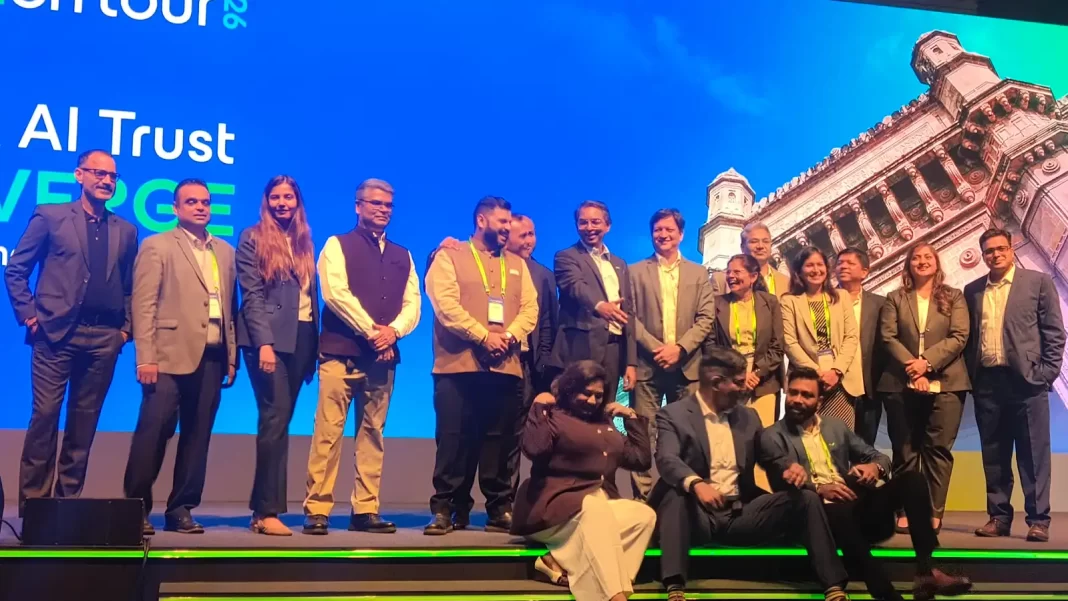
MUMBAI — India’s growing use of artificial intelligence across enterprises, government departments and public sector organisations is forcing technology leaders to rethink data resilience, cyber recovery, skilling and compliance, tech executives and CIOs said at VeeamON Tour 2026 in Mumbai.
The May 26 programme, hosted by Veeam Software at the Grand Hyatt in Mumbai’s Bandra Kurla Complex, brought together more than 400 delegates and over 50 speakers at a time when organisations are under pressure to secure expanding data estates, prepare for ransomware attacks and align digital services with the Digital Personal Data Protection Act.


By the numbers
Key figures from this story- 400+
- delegates at VeeamON Mumbai 2026
- 50+
- speakers across sessions
- 25+
- government and PSU CIOs at evening roundtable
The discussions showed how AI adoption is moving beyond experimentation in India, but also how data protection, consent management, skills shortages and operational readiness could determine whether enterprises and public institutions can deploy AI safely at scale.
The event included a morning roundtable on Saksham Bharat, cyber skilling and job creation, CXO discussions through the day, a large main hall programme and an evening government and public sector roundtable attended by more than 30 CIOs and CISOs from government and PSU organisations.
Saksham Bharat, cyber skilling and job creation
The larger message from the Mumbai edition was that data resilience is no longer being treated only as an infrastructure or backup issue. As AI systems become more dependent on sensitive, distributed and real-time data, organisations are being pushed to connect cyber security, governance, compliance and workforce capacity into one operational framework.
Kushagra Sharma, Director, Marketing, India and SAARC, Veeam Software, who drove the initiative, said the purpose was to bring conversations on AI, skilling, governance and resilience together rather than treat them as separate technology tracks.
“AI is changing how every organisation thinks about productivity, customer engagement and public service delivery, but its value depends on the quality, protection and recoverability of data,” Sharma said.
“Our effort with VeeamON Mumbai was to move the discussion from awareness to action, whether that action is skilling young professionals, helping CISOs prepare for ransomware or supporting government CIOs as they build trustworthy AI-led services.”

The focus comes as Indian companies and public institutions increase AI pilots across customer service, analytics, workflow automation, fraud detection, document processing and citizen service delivery. But many organisations continue to face fragmented infrastructure, unclear data ownership, weak recovery processes and limited internal skills to govern AI-linked data flows.
For CIOs and CISOs, the challenge is increasingly twofold: to enable AI-led innovation while ensuring that the data feeding those systems is protected, compliant and recoverable.
Sandeep Bhambure, Vice President and Managing Director, Veeam India and SAARC, said India’s digital expansion required cyber resilience to be built into the foundation of enterprise and public-sector systems.
“As digital services scale across governance, education and enterprise ecosystems, cyber resilience must become foundational,” Bhambure said.
That theme ran through the day’s discussions. Speakers said AI readiness would be constrained if organisations could not classify sensitive information, manage consent, protect cloud and hybrid workloads, recover clean data after attacks and demonstrate accountability to regulators, customers and citizens.
The Saksham Bharat roundtable, focused on cyber skilling, employability and the need for industry-academia collaboration. It examined how India can build a workforce that understands cyber resilience, backup and recovery, ransomware response, AI governance, cloud security and data protection.
Participants said the skills gap was not limited to advanced cyber security roles. Organisations also need administrators, developers, data managers, compliance professionals and infrastructure teams who understand how digital systems fail, how they are attacked and how they can be restored.
The discussion was linked to Veeam’s Bharat CyberSuraksha and Saksham Bharat efforts, including the “Main Hoon Saksham” initiative around cyber, AI and data resilience skills. Veeam has also been expanding its skilling engagement through academic partnerships, including earlier cyber resilience and AI skilling efforts in Northeast India.
The skilling push is significant because India’s digital growth is often measured through platforms, connectivity, AI adoption and cloud migration, while the human capability needed to operate and secure those systems receives less attention. Participants said practical labs, recovery simulations, certifications, internships and industry-led curriculum could help bridge the gap between classroom learning and workplace requirements.
AI creating new operational opportunities, also new risk surfaces
The main hall sessions focused on data resilience, AI-led business change and cyber recovery for enterprise organisations. Delegates discussed how ransomware, cloud complexity, regulatory pressure and growing data volumes are reshaping technology priorities.
Executives said AI was creating new operational opportunities but also new risk surfaces. AI tools can improve productivity, automate decisions and accelerate service delivery, but they also depend on trusted data pipelines. If those pipelines are compromised, poorly governed or unavailable during a cyber incident, the risk shifts from IT disruption to business, regulatory and reputational exposure.
For enterprises, that means AI deployment cannot be separated from data governance and resilience. For public-sector institutions, the stakes are wider because AI systems may touch citizen data, welfare delivery, public records, transport, finance, healthcare, utilities and other essential services.
The government and public sector roundtable brought these issues into sharper focus. More than 30 CIOs and CISOs from government and PSU organisations discussed how AI is being evaluated and used in departments, agencies and public-sector enterprises.
Participants spoke about the use of AI for internal process improvement, document handling, analytics, citizen-facing services and decision support. They also discussed barriers such as data quality, integration with legacy systems, limited internal capacity, consent management and compliance with the DPDP Act.
AI Resiliency for Public Sector and Government
Consent management emerged as one of the central concerns. Under India’s data protection framework, organisations handling personal data will need to strengthen processes around notice, consent, purpose limitation, retention, security safeguards and grievance redressal. For government and PSU organisations that hold large volumes of citizen, employee and customer data, this will require both technology systems and institutional accountability.
Several participants said public-sector AI use would need guardrails that are practical, auditable and suited to Indian administrative realities. AI can help improve service delivery, identify fraud, speed up file processing and support decision-making, but weak data lineage, unclear accountability and poor recovery planning could undermine public trust.
Nipurn Dholakia, Director, Public Sector and Financial Services, Veeam India, said recoverability becomes critical when AI-enabled services depend on multiple databases, cloud systems and third-party platforms.
“If an AI-enabled service depends on multiple databases, cloud systems and third-party tools, the ability to recover clean data after an incident becomes essential. Similarly, if citizen-facing services are disrupted by ransomware or system failure, the public impact is immediate,” Dholakia said.
The Mumbai programme also included a dedicated marketing leadership component, with participation from chief marketing officers and senior marketing leaders from various organisations. Belinda Pervan, Vice President, Asia Pacific and Japan Marketing at Veeam Software, and other senior Veeam executives shared perspectives on how AI is changing enterprise marketing.
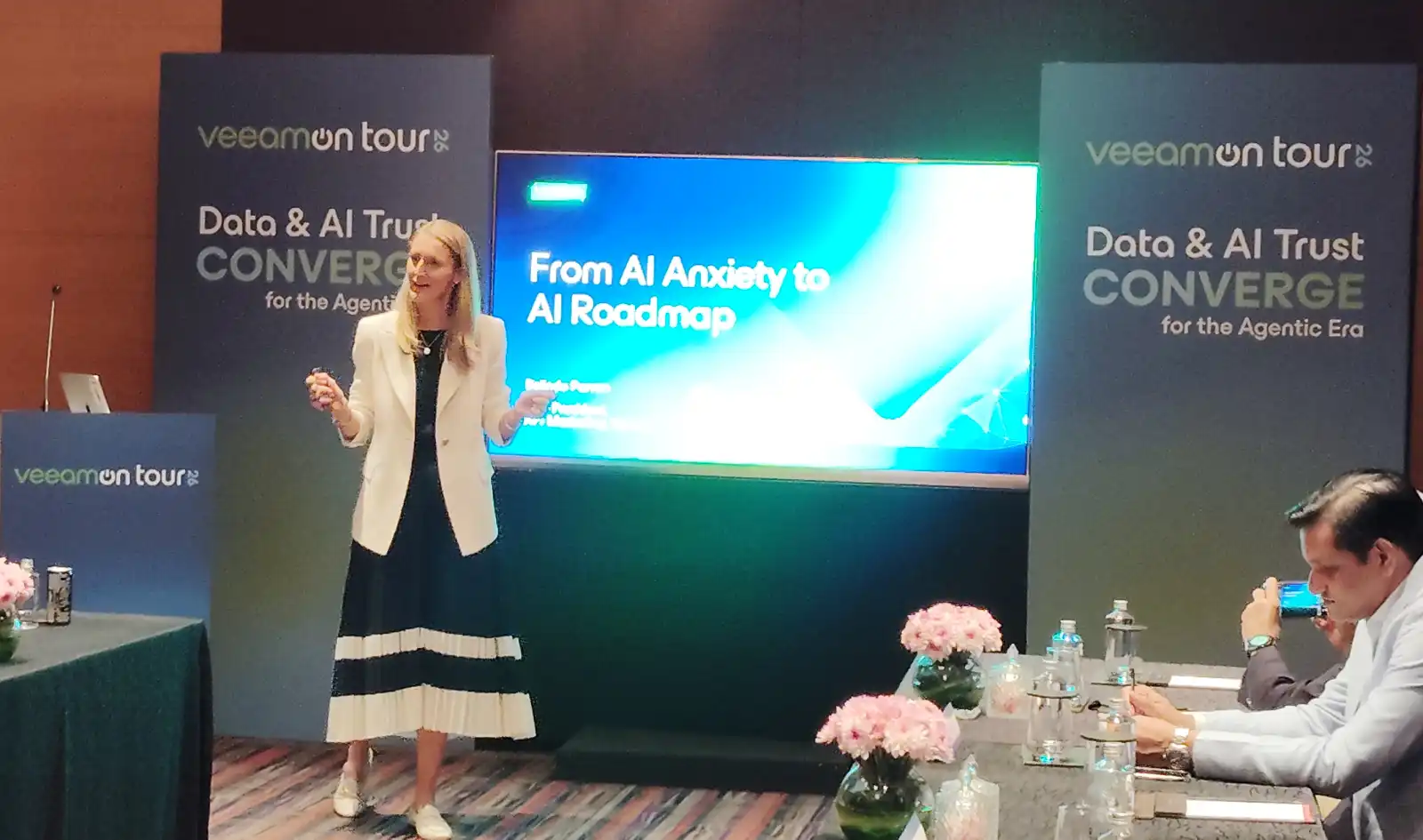
The CMO discussions reflected how AI is affecting not only IT and security functions but also business teams responsible for customer engagement, segmentation, campaign planning, content workflows and performance measurement. Marketing leaders said AI could improve speed and personalisation, but its use would depend on responsible data practices, privacy safeguards and trust.
VeeamON Mumbai – AI is changing enterprise marketing
“Marketing teams are being asked to move faster, personalise better and show clearer business impact,” Pervan said. “AI can help, but only when teams combine experimentation with discipline around data, privacy and trust. The future of marketing will not be about using more tools. It will be about using data more responsibly and creatively.”
Sharma said marketing itself was becoming an early test case for responsible AI adoption within organisations.
“Marketing has always been close to customers, partners and market signals, so it is one of the first functions where AI can show visible impact,” he said. “But the same function must also demonstrate how AI can be used with accountability, clean data and measurable outcomes. That is why conversations between CMOs, CIOs and CISOs are becoming more important.”
Veeam’s Mumbai event suggested a wider shift in how enterprise technology companies are engaging with the Indian market. Rather than limiting the conversation to product capabilities, the company positioned cyber resilience as a broader agenda linked to AI adoption, public-sector transformation, skilling, compliance and business continuity.
That approach comes as technology buying decisions in India become more distributed. Cyber resilience is no longer the sole responsibility of IT infrastructure teams. It now involves CISOs, CIOs, compliance officers, legal teams, business leaders and, in the public sector, policy and administrative stakeholders.
The same shift is visible in AI adoption. Enterprises are moving from pilots to production use cases, while government agencies are exploring AI for faster service delivery and better operational efficiency. But both sectors face a common question: whether they have the data architecture, cyber controls, recovery systems and talent base needed to support AI safely.
For Veeam, the opportunity lies in positioning backup, recovery and data management as critical components of AI readiness. Its Bharat CyberSuraksha and Saksham Bharat initiatives also give the company a policy-adjacent platform to engage academia, government and public-sector institutions on cyber capacity building.
The execution, however, will determine the long-term value of such initiatives. India has seen several skilling programmes that created awareness but struggled to deliver measurable employment outcomes. For Saksham Bharat to have impact, it will need clear indicators such as students trained, labs created, institutions onboarded, internships enabled, certifications completed and jobs generated.
The same applies to government and PSU roundtables. Such discussions can surface operational challenges, but their real value depends on whether they lead to practical frameworks, repeat engagement and implementation support for public-sector technology teams.
The Mumbai edition of VeeamON Tour 2026 showed that India’s data protection conversation is maturing. It is moving beyond backup windows, storage planning and compliance checklists into a wider debate about AI governance, public trust, cyber recovery, skilling and institutional readiness.
For enterprises, the key message was that AI adoption without resilient data systems could increase risk. For government and PSU organisations, the mandate is more complex: use AI to improve public services while protecting citizen data, managing consent, meeting DPDP obligations and ensuring continuity of critical systems.
Veeam is scheduled to host the Bengaluru and Delhi editions of VeeamON Tour India on June 3 and June 19 respectively, extending the discussion to more enterprise, government and public-sector technology leaders.
Your Questions, Answered
What was VeeamON Tour 2026 Mumbai about?
The event focused on cyber resilience, AI readiness, workforce skilling and data governance. Over 400 delegates from enterprises and government bodies discussed challenges under India's Digital Personal Data Protection Act and rising ransomware threats.
What is the Saksham Bharat initiative?
Saksham Bharat is Veeam's programme addressing the cyber skills gap in India. It focuses on embedding resilience skills into curricula and bridging the disconnect between academic qualifications and workplace requirements in backup, recovery and cloud security.
Why is cyber skilling important for Indian organisations?
As government services and enterprise workloads move to cloud and hybrid environments, demand for professionals who understand both digital operations and cyber recovery is outpacing supply. The gap extends beyond threat analysts to administrators, developers and compliance roles.
How does the DPDP Act affect data resilience requirements?
The Digital Personal Data Protection Act places new obligations on data fiduciaries, requiring organisations to ensure data quality, protection and recoverability. This has elevated resilience from an IT function to a boardroom and regulatory priority.


