





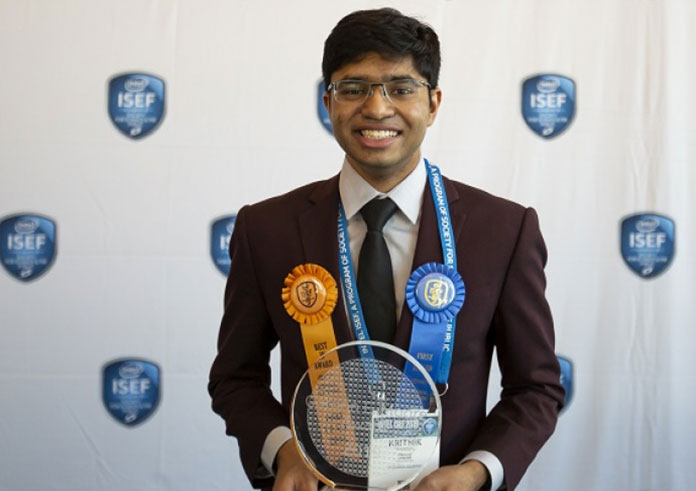

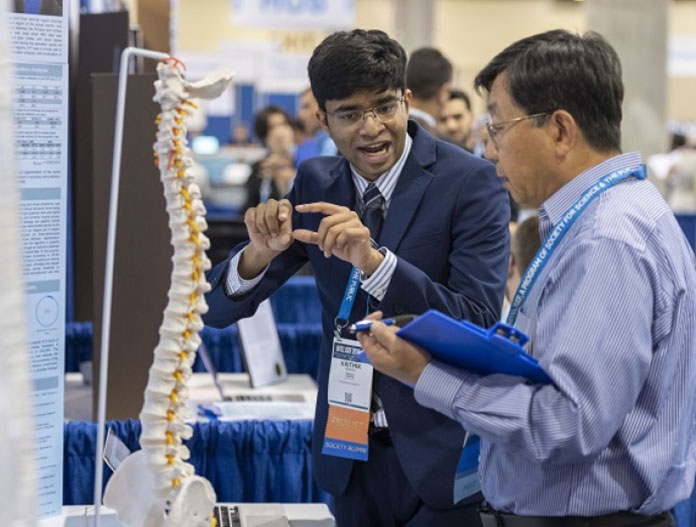
A 16-year-old Indian-American engineer Krithik Ramesh has won the $75,000 Gordon E. Moore Award for developing a machine learning technology for orthopaedic surgeons that can enable greater accuracy for screw placement during spinal surgery. Gordon E. Moore Award is given in honour of the American chipmaker Intel co-founder and fellow scientist.
Based on Ramesh’s tests, machine learning method has the potential to decrease operating time by at least 30 minutes, reduce physical therapy recovery time by four weeks and diminish the negative side effects associated with traditional medical imaging, said Intel.
Intel organises the Intel International Science and Engineering Fair to promote STEM education. Like Ramesh, 15-year-old Shriya Reddy received $10,000 Craig R. Barrett Award for Innovation for her novel, noninvasive approach for rapidly diagnosing melanoma lesions.



This year, the other top two awards went to 17-year-old Allison Jia from San Jose, California and Rachel Seevers from Lexington, Kentucky. Jia received one of two Intel Foundation Young Scientist Awards of $50,000 for her investigation into toxic tau protein aggregates, which spread in neurons in the human brain and are associated with neurodegenerative diseases such as Alzheimer’s.
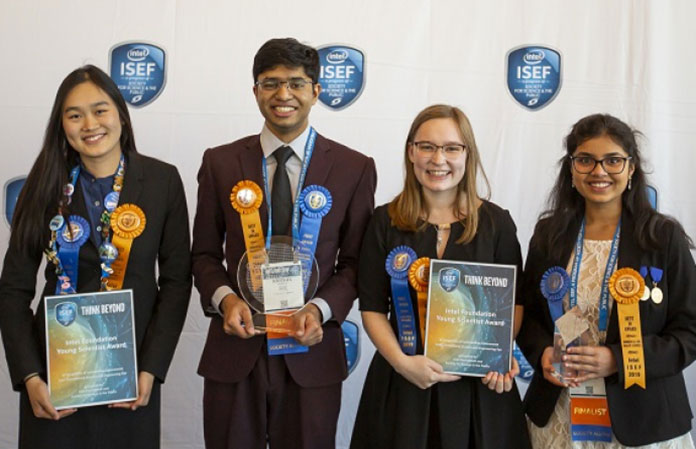
Seevers received the other Intel Foundation Young Scientist Award of $50,000 for designing, building and testing a rigid, energy-efficient prototype of an underwater propulsion device that mimics the way jellyfish move through the water. This could allow for greater access to the world’s unexplored oceans.
“Intel is proud to honour Krithik Ramesh, Rachel Seevers, Allison Jia, Shriya Reddy and all of the ISEF finalists on their innovative work, which is helping to advance key research areas and provide solutions to global challenges that are critical today. The work they are doing has the potential to make a better tomorrow for all of us,” said Pia Wilson-Body, president of the Intel Foundation.
Intel said that in addition to the top winners, approximately 600 finalists received awards and prizes for their innovative research, including 22 “Best of Category” winners, who each received a $5,000 prize in addition to their $3,000 first-place award. The Intel Foundation also awarded a $1,000 grant to each winner’s school and to the affiliated fair they represent.
“The Intel International Science and Engineering Fair is the world’s most powerful STEM talent pipeline and I am inspired by all of the ingenuity on display this week,” said Maya Ajmera, president and CEO of Society for Science & the Public and publisher of Science News.


