






Key Points
- Defence production rose from Rs 43,000 crore in 2013-14 to Rs 1.78 lakh crore in FY 2025-26
- Defence exports grew from Rs 686 crore to nearly Rs 39,000 crore with over 100 importing countries
- Licence approvals now cleared within three weeks under simplified process
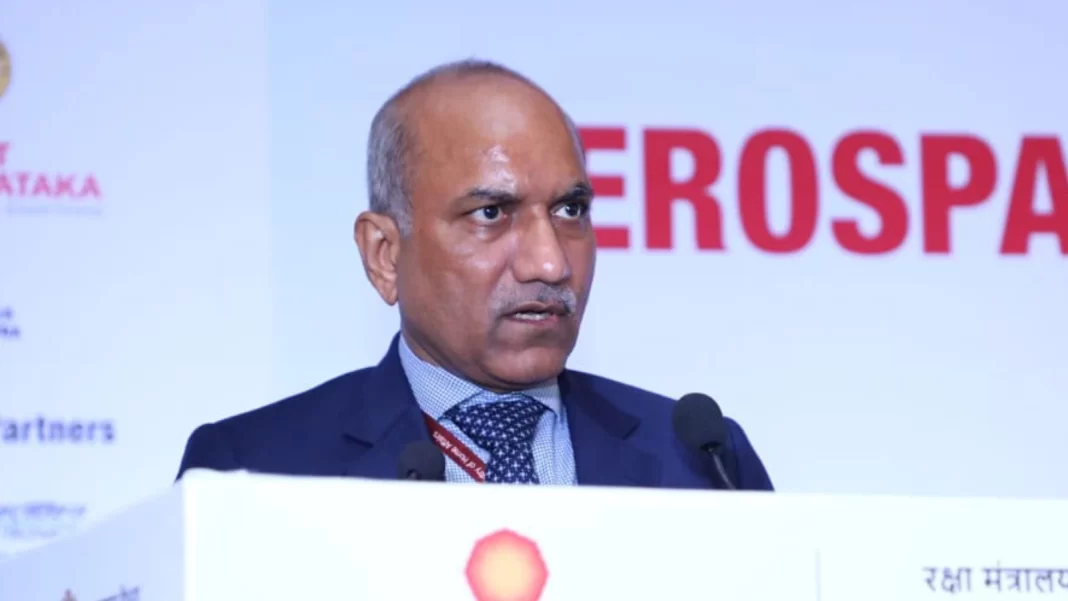
India’s domestic defence production has grown more than fourfold to Rs 1.78 lakh crore in FY 2025-26, up from Rs 43,000 crore in 2013-14, with exports now reaching over 100 countries, Sanjeev Kumar, secretary, Department of Defence Production, said on Tuesday.
Speaking at a national conference organised by the Associated Chambers of Commerce and Industry of India (ASSOCHAM) in New Delhi, Kumar said the sector had reached a historic inflection point but warned that Indian industry must move beyond manufacturing under licence to building indigenous design capability if it is to become a global powerhouse.



Defence exports rose to nearly Rs 39,000 crore last year from Rs 686 crore in 2013-14, including Rs 6,300 crore worth of aerospace products. Kumar noted these figures showed long-term, stable export relationships rather than opportunistic sales driven by shifting global situations.
The secretary attributed the transformation to policy reforms under the Atmanirbhar Bharat and Make in India initiatives. These include reserving 75 per cent of the capital acquisition budget for Indian companies, prioritising indigenously designed platforms and creating support mechanisms such as the Technology Development Fund, IDEX (Innovations for Defence Excellence, a programme that funds defence startups) and the Srijan portal, a platform that lists components currently imported that could be manufactured domestically.
Simplified licensing
Kumar said the government had significantly simplified the process for granting defence manufacturing licences. A 19-member evaluation committee has been disbanded, with approvals now cleared directly by the concerned Joint Secretary in consultation with the Defence Research and Development Organisation (DRDO) and the Directorate General of Quality Assurance (DGQA), the defence ministry’s quality control body.
“It doesn’t require now more than three weeks, unless some information is awaited,” Kumar said. Export licensing has similarly been rationalised, with powers delegated to the Joint Secretary level. A one-time, multi-year export authorisation regime is under consideration for long-term supply partners of global original equipment manufacturers.
Micro, small and medium enterprises now contribute 50 to 60 per cent of the value in several platforms delivered by defence public sector undertakings, according to Kumar. He urged the private sector, particularly young entrepreneurs and tier 1, tier 2 and tier 3 suppliers, to invest in genuine research and development rather than relying on technology transfer agreements.
“No country, no company gives their latest technology to anybody else except their own forces,” Kumar said. “Sometimes, few of us should take the difficult path. And the people who take the difficult path would emerge winners, as has been historically across the world.”
State initiatives
The conference heard from state government officials on regional aerospace and defence ecosystems. N Yuvraj, secretary, Industries and Commerce Department, Government of Andhra Pradesh, spoke about the state’s efforts to develop testing infrastructure and discussed ongoing work with the Ministry of Defence on common storage infrastructure for munitions.
Khushboo Goel Chowdhary, commissioner for Industrial Development and chief executive officer, Invest Karnataka, said the state already held a dominant position in the space and defence sector.
“We have a deep ecosystem bringing together HAL, BEML, BEL, DRDO and a lot of research institutes. Global OEMs already exist, and not to forget the 2,000-plus MSMEs which are working in this sector,” she said.
HAL refers to Hindustan Aeronautics Limited, the state-owned aerospace manufacturer. BEML is Bharat Earth Movers Limited, which makes defence and mining equipment. BEL is Bharat Electronics Limited, which produces military electronics.
By the numbers
Key figures from this story- Rs 1.78 lakh crore
- Defence production in FY 2025-26
- Rs 39,000 crore
- Defence exports last year
- 100+
- Countries importing Indian defence products
Rajiv Gupta, chairman, National Council on Aerospace and Defence, ASSOCHAM, said localisation was the first step toward competitiveness.
“What it does is create a positive note for us to start making our products domestically for ourselves. The second is competitiveness of the Indian ecosystem, which is a sum total of my supply chain, my MSMEs, my IT, my ability to do the engineering, and my ability to execute proficiently on the expectations we have on a global stage as we scale up.”
Your Questions, Answered
How much has India's defence production grown?
India's domestic defence production grew from Rs 43,000 crore in 2013-14 to Rs 1.78 lakh crore in FY 2025-26, a more than fourfold increase according to the Department of Defence Production.
How many countries import Indian defence products?
Over 100 countries now import Indian defence products. Defence exports grew from Rs 686 crore in 2013-14 to nearly Rs 39,000 crore last year.
How long does it take to get a defence manufacturing licence?
The approval process now takes no more than three weeks unless additional information is required. The government disbanded a 19-member evaluation committee and delegated approvals to Joint Secretaries.
What role do MSMEs play in Indian defence manufacturing?
Micro, small and medium enterprises contribute 50 to 60 per cent of the value in several platforms delivered by defence public sector undertakings, according to the defence production secretary.


