





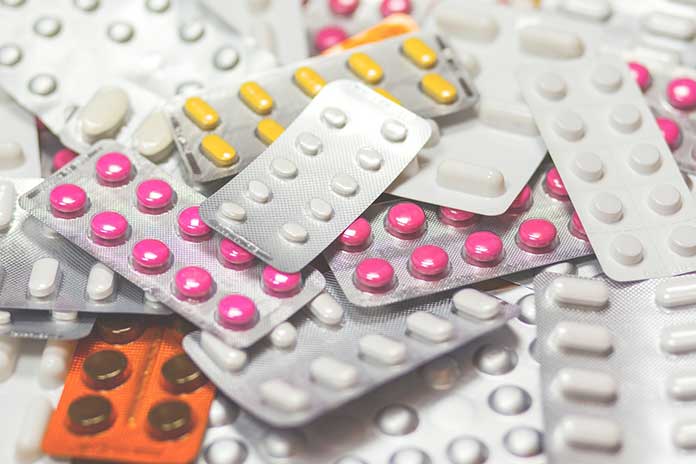

To address the growing challenge of counterfeit drugs in India, NITI Aayog has partnered with technology firm Oracle, Apollo Hospitals and pharmaceutical manufacturer Strides Pharma Sciences, to pilot a real drug supply chain using blockchain decentralized ledger and IoT software. According to the government think tank, this will bring transparency, accountability and efficiency in tracing and tracking drugs manufactured in India.
The major advantages of blockchain software will be its ability to allow the sharing of information across the supply chain securely recording every exchange of information, and the tamper-proof nature of records of drug movement, which would ensure there is no dispute if an offender is identified, said NITI Aayog.
“The problem of fake and counterfeit drugs is a major issue, costing the Indian pharma industry billions. At the same time, it’s putting patients at higher risk. This agreement with Oracle and our partnership with Apollo Hospitals and Strides Pharma, will help ensure all Indian drug manufacturers and healthcare experts have access to a standards-based, modern technology platform – blockchain and IoT, to help eliminate fake drug distribution,” said Amitabh Kant, CEO, NITI Aayog.

Oracle claimed that its blockchain software permanently registers a drug’s record in the manufacturer’s drug supply chain (serial number, labelling, scanning), leaving no scope for record tampering. From here on, at every point of hand change, it records the drug’s movement – from manufacturer to logistics, from stockist to hospital, or from pharmacy to consumer. In case of a fake drug, the software will detect irregularity and notify the concerned nodal point. Additionally, the company said its IoT solution provides functionality to track critical information such as chemical ingredients of the drug or maintenance of temperature control in case of life saving drugs or vaccines.
“With blockchain, every movement of the drug through its supply chain is recorded – that way, the drug supply chain is completely transparent, secure, decentralized and verifiable. We believe blockchain and IoT can play a significant role in ceasing fake drug distribution and we are all geared to work with NITI Aayog in this major program,” said Shailender Kumar, Regional Managing Director, Oracle India.
The Indian pharmaceutical industry is the third largest in the world in volume, accounting for 10 percent of the world’s production. A recent report by World Health Organization estimates 20 percent of all drugs sold in India are fake. Also, as the largest producer of generic drugs in the world, India is reported to be the source of 35 percent of all counterfeit drugs sold worldwide.


