






Key Points
- Vishvajit Sahay took charge as Secretary (Defence Finance) on 1 May 2026
- He previously served as Controller General of Defence Accounts since joining IDAS in 1990
- Career spans three decades across defence finance and central government ministries
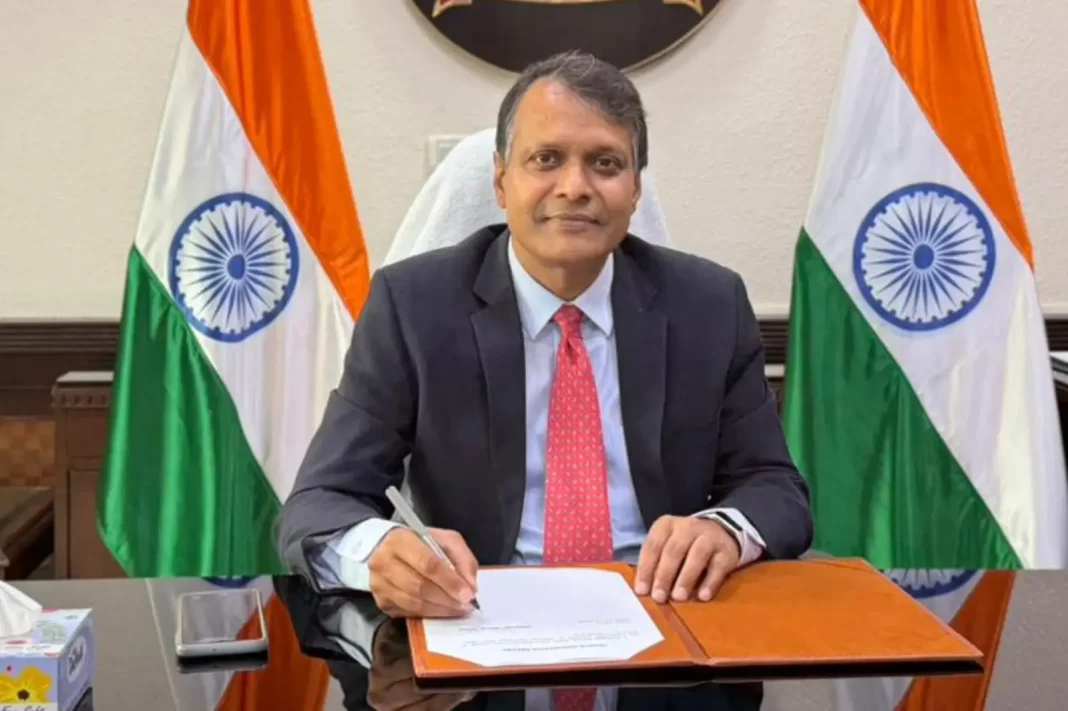
Vishvajit Sahay assumed charge as Secretary (Defence Finance) in the Ministry of Defence on 1 May 2026. He was previously the Controller General of Defence Accounts (CGDA), the apex body overseeing financial management across India‘s defence establishment.
Sahay is a 1990-batch officer of the Indian Defence Accounts Service (IDAS), the cadre responsible for financial advice and audit across the armed forces. He holds degrees from St. Stephen’s College, University of Delhi, and is a law graduate.



His appointment follows over three decades in defence finance and central government administration. Previous postings include Additional Secretary and Financial Adviser in the Department of Science and Technology, Joint Secretary in the Department of Heavy Industries, and Director in the Ministry of Information and Broadcasting.
Within the defence accounts cadre, Sahay has served as Principal Controller of Defence Accounts (Pensions) in Prayagraj, Joint CGDA and Special CGDA. He also held the position of Finance Manager in the Acquisition Wing of the Ministry of Defence.
Sahay has represented India at international training programmes, including at the University of Cambridge and the George C. Marshall European Centre for Security Studies in Germany.
Your Questions, Answered
Who is the new Secretary (Defence Finance)?
Vishvajit Sahay, a 1990-batch officer of the Indian Defence Accounts Service, assumed charge on 1 May 2026. He was previously the Controller General of Defence Accounts.
What is the role of Secretary (Defence Finance)?
The Secretary (Defence Finance) heads financial management and budget oversight within the Ministry of Defence, advising on all matters related to defence expenditure and acquisitions.
What is the CGDA?
The Controller General of Defence Accounts is the apex body overseeing financial management, audit and accounting functions across India's defence services. Sahay held this position before his current appointment.
What is the Indian Defence Accounts Service?
The IDAS is a Group A central civil service responsible for financial advice, internal audit and accounting across the Indian armed forces and defence organisations.


