






Key Points
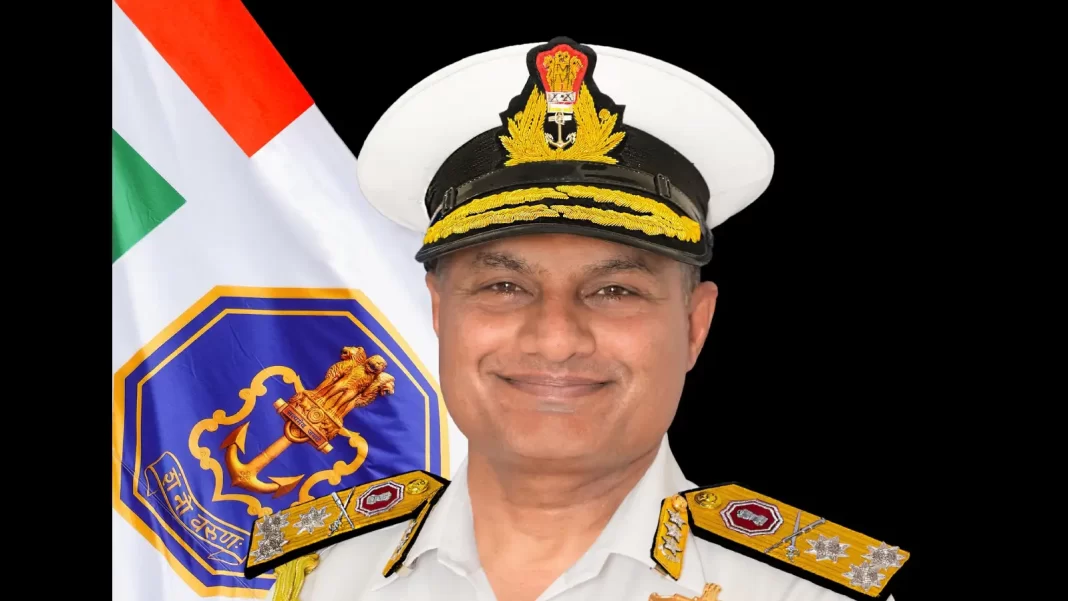
- Vice Admiral Krishna Swaminathan to take charge as Chief of Naval Staff on 1 June 2026
- Outgoing CNS Admiral Dinesh Kumar Tripathi retires on 31 May 2026
- Swaminathan commanded INS Vikramaditya and led the Western Fleet
Vice Admiral Krishna Swaminathan has been appointed as the next Chief of the Naval Staff, the government announced on Saturday. He will take charge on 1 June 2026, succeeding Admiral Dinesh Kumar Tripathi, who retires on 31 May 2026.
Swaminathan currently serves as the Flag Officer Commanding-in-Chief of the Western Naval Command, a position he assumed on 31 July 2025. He is the 34th officer to hold that command. Before this, he served as Vice Chief of the Naval Staff at Naval Headquarters in New Delhi.



The incoming Chief of Naval Staff is a specialist in communication and electronic warfare, a domain that has grown increasingly critical as naval operations incorporate advanced sensors, satellite links and cyber capabilities. He was commissioned into the Indian Navy on 1 July 1987.
Command and operational experience
Swaminathan has commanded several frontline vessels during his 38-year career. His commands include the missile vessels INS Vidyut and INS Vinash, the missile corvette INS Kulish, the guided missile destroyer INS Mysore and the aircraft carrier INS Vikramaditya — the Navy’s largest warship.
As a flag officer, he led the Western Fleet as Flag Officer Commanding, a role that placed him in charge of the Navy’s primary strike force. He also served as Flag Officer Sea Training, heading the Work Up Organisation that certifies ships and submarines for operational deployment.
In a shore-based capacity, Swaminathan served as Chief Staff Officer for Training at Southern Naval Command in Kochi, where he oversaw training programmes across the force. He was instrumental in establishing the Indian Naval Safety Team, which monitors operational safety across all Navy verticals.
He later served as Flag Officer Offshore Defence Advisory Group and as Adviser on Offshore Security and Defence to the government, a posting that involved coordination with civilian maritime agencies and the Coast Guard.
Vice Admiral Krishna Swaminathan education and decorations
Swaminathan holds a PhD in International Studies from Mumbai University and an MPhil in Strategic Studies from the same institution. He earned a Master of Arts in Defence Studies from King’s College London and a Master of Science in Telecommunications from Cochin University of Science and Technology. His undergraduate degree is a BSc from Jawaharlal Nehru University.
He has trained at the National Defence Academy in Khadakvasla, the Joint Services Command and Staff College in Shrivenham in the United Kingdom, the College of Naval Warfare in Karanja and the United States Naval War College in Newport, Rhode Island.
The Vice Admiral has been awarded the Param Vishisht Seva Medal, the Ati Vishisht Seva Medal and the Vishisht Seva Medal — decorations recognising distinguished service of an exceptional order, distinguished service of a high order and distinguished service respectively.
Admiral Tripathi, the outgoing Chief of Naval Staff, has also been decorated with the Param Vishisht Seva Medal, Ati Vishisht Seva Medal and Nau Sena Medal.
Your Questions, Answered
Who is the next Chief of Naval Staff?
Vice Admiral Krishna Swaminathan has been appointed as the next Chief of Naval Staff. He currently serves as Flag Officer Commanding-in-Chief of the Western Naval Command and will take charge on 1 June 2026.
When does Admiral Dinesh Kumar Tripathi retire?
Admiral Dinesh Kumar Tripathi, the current Chief of Naval Staff, will retire on 31 May 2026. Vice Admiral Krishna Swaminathan will succeed him the following day.
What is Vice Admiral Swaminathan's specialisation?
Vice Admiral Krishna Swaminathan is a specialist in communication and electronic warfare. He has commanded vessels including the aircraft carrier INS Vikramaditya and led the Western Fleet.
What educational qualifications does the new CNS hold?
Vice Admiral Swaminathan holds a PhD in International Studies and MPhil in Strategic Studies from Mumbai University, an MA in Defence Studies from King's College London and an MSc in Telecommunications from Cochin University.


