





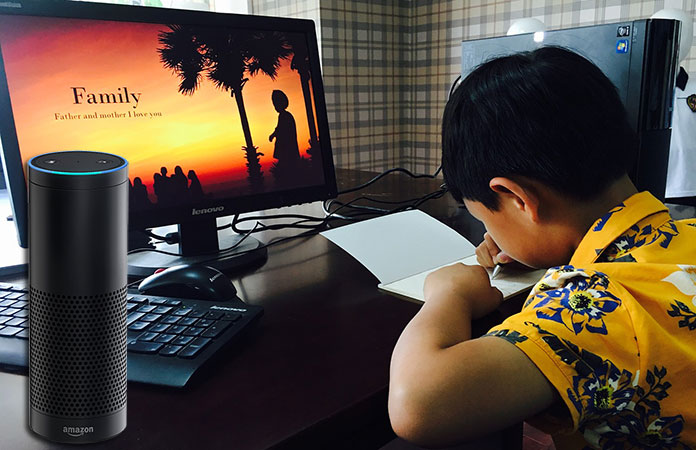

“Alexa, who was the first man on moon?” – Ashni, 6 years. Class 1 student. “OK Google, what is the formula of compound interest?” – Kush, 15 years, Class 10 student. “Hey Siri, what is sunk cost?” – Natasha, 23 years, MBA student. Artificially Intelligent Assistants are all around us, and the learners are already taking advantage of them. But is there more to this fascinating piece of technology that can help learners and educators?
Artificial Intelligence (AI) is a way of making a computer, or a software think and make a decision intelligently; the way humans think and make decisions. The term was coined by John McCarthy way back in 1955. Machine Learning (ML) is the application of AI whereby machines or computers learn by themselves without explicit programming which helps them improve their performance for whatever purpose they were created. It could be playing chess or detecting tumours in patients.
AI and ML have come a long way and are revolutionizing and disrupting entire industries. AI is changing the way humans work in a range of fields from self-driving cars to derivatives trading. However, when it comes to education, AI has not made significant inroads yet. AI has been primarily implemented in tools that measure student performance and give feedback.However, technologies like artificial intelligence and machine learning clearly present significant opportunities to raise the quality of education of our current one-size-fits-all system and allow a shift of teachers’ focus on higher-value creative, interpersonal and engagement tasks.

Let’s take a look at some avenues where AI can bring a paradigm shift in the field of education and learning.
Automation of routine activities
AI can automate time consuming routine activities like assessments and grading, administrative tasks like attendance and progress tracking and report generation. Educators spend a tremendous amount of time in grading. While grading of multiple choice type questions is possible even without AI, with AI even long form subjective answers can also be assessed and graded by AI based algorithms. Professional examinations like GMAT are already employing AI to grade subjective answers.
Personalised learning
AI feeds on data. The AI uses metrics for what it considers effective teaching practices to coach tutors on the best way to direct a tutorial, present information, or instruct a lesson. Machines learn and improve as they come process more and more data. AI can look at learning outcome data of thousands of students and can then detect patterns and suggest personalised learning path for each individual student. AI combined with adaptive learning and gamification can tailor the learning experience for each individual’s abilities and needs. In a class, students of varying abilities can learn at their individual pace.
Curriculum enhancement
The way AI can chart out a unique learning path for each student; it can also identify the gaps in the curriculum itself and suggest modifications. AI can monitor the learning outcomes over large groups of students and can identify any deviance in learning outcomes and alert teachers to modify or upgrade the curriculum and content accordingly. AI can even enhance the content on its own by identifying and fetching open educational content from the ocean of knowledge on the Internet.
AI tutors
AI can even take on the role of the teacher. A virtual tutor assisted by AI can do wonders to the way students learn. The examples we saw of students asking questions to AI assistants is the first step in that direction. We don’t envision robots teaching students anytime soon though. The AI tutors will comes in various forms and shapes like smart speakers, chatbots, mobile apps and virtual onscreen characters. For mainstream education, an algorithm cannot provide the human element that is so crucial to learning. But for secondary sources of information and less formal avenues of instruction, AI can play a more hands-on role.
Smart content
Books are passé, videos are here and smart content is the future when it comes to disseminating knowledge. AI, in conjunction with Virtual Reality (VR) and Augmented Reality (AR) can take the learning experience to a new level. Engineering students can experience the internals of a car engine, medical students can perform virtual surgeries, and students can give mock interviews and converse with virtual interviewers and get instant feedback to improve their performance. Both humans and machines come out smarter from the experience.
We are at the cusp of an epochal shift in the field of education. 20th century saw democratization of education where the education became available and accessible to everybody. However, it remained stagnant in the ways it was delivered to the students. Now with the advent of Artificial Intelligence and Machine Learning, we are going to witness a revolution in the methods of delivery, assessment and grading and measuring the outcome of education. Students, teachers, educational institutions and industries are in for an exhilarating ride!
What is at stake is something world-changing. And we need it to be. Together, we have the opportunity to put AI—the next phase of the technological revolution and one of the most important of all time—at the service of the learners. If we can create the right structures, ethics and incentives, then the scientific and social progress could be truly incredible.
The writers – Shantanu Rooj is CEO and and Yash Gadhiya is CTO – at Schoolguru Eduserve.


