






Key Points
- UPI transactions above Rs 2,000 will attract 0.4 per cent MDR from 15 October 2026
- More than 95 per cent of P2M transactions remain free as they fall below Rs 2,000 threshold
- Small merchants receiving up to Rs 1 lakh monthly through QR codes exempt from new charges
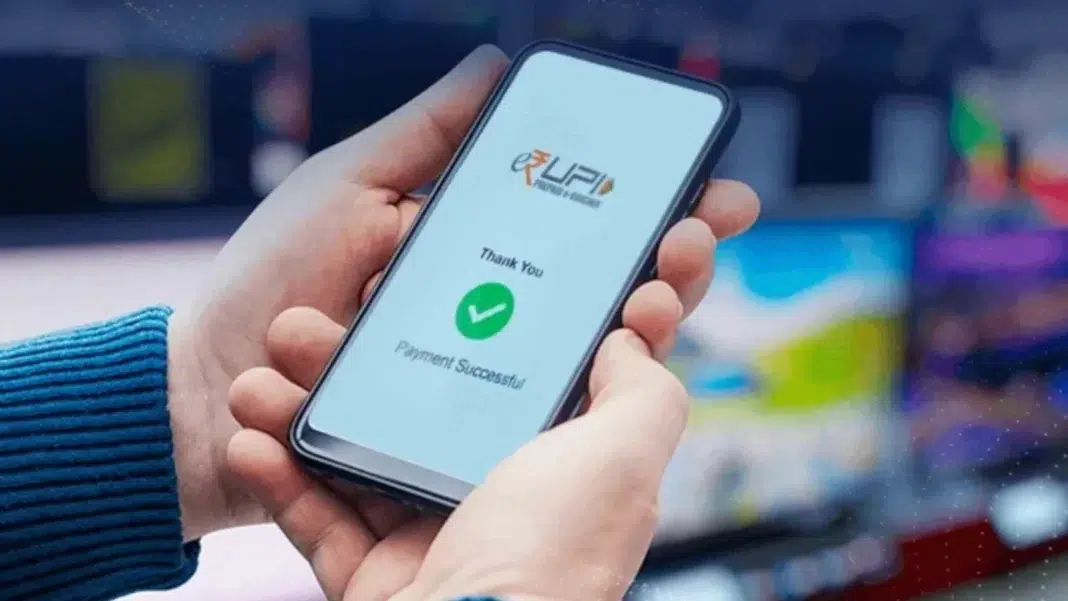
The National Payments Corporation of India (NPCI) will impose a merchant discount rate (MDR) of 0.4 per cent on UPI person-to-merchant transactions exceeding Rs 2,000 from 15 October 2026, ending the zero-fee regime that has driven India’s digital payments expansion.
The fee, which merchants pay to banks and payment processors for handling transactions, will be capped at Rs 300 for payments of Rs 75,000 and above, according to an NPCI document released this week. A Rs 1 lakh transaction would attract Rs 300 under the cap rather than Rs 400 at the standard rate.


NPCI said more than 95 per cent of person-to-merchant (P2M) transactions are worth Rs 2,000 or less and will remain free. The revenue generated will stay within the UPI ecosystem to fund infrastructure resilience, innovation, cybersecurity and customer service, the payments body stated.
The framework marks a shift in UPI’s operating model as the platform scales. NPCI cited August 2026 volumes of 2,451 crore transactions worth Rs 29.9 lakh crore to justify the infrastructure demands of the growing network.
MDR exemptions
Consumers will continue making UPI payments without charges regardless of transaction value. Person-to-person transfers, including self-transfers, remain free with no MDR applied at any amount.
Small merchants classified under the person-to-person-merchant (P2PM) category, those receiving up to Rs 1 lakh monthly through UPI QR codes, will retain zero-MDR treatment. A payment exceeding Rs 2,000 does not trigger the fee if the merchant remains in the exempt P2PM category, NPCI clarified.
Banks and payment service providers will monitor monthly inward UPI payments. Merchants receiving more than Rs 1 lakh for three consecutive months will be moved to the standard P2M category and become subject to the 0.4 per cent charge on transactions above Rs 2,000.
UPI AutoPay and mandate-based recurring payments, including utility bills, OTT subscriptions and recurring investments, will not carry the MDR. Credit-linked UPI transactions through RuPay credit cards and pre-sanctioned bank credit lines follow separate credit-product rules.
P2PM merchants will not need to change existing QR codes, soundboxes or other payment infrastructure, NPCI confirmed.
Sector-specific rates
Capital-market transactions will attract a lower MDR of 0.02 per cent, capped at Rs 300. This covers payments to mutual funds, securities firms, SEBI-registered stockbrokers, securities dealers and investment platforms for equity purchases, debt-market investments, mutual-fund subscriptions and broker wallet top-ups.
Essential services including railways, telecom, insurance and fuel will use a flat Rs 5 MDR instead of the percentage rate for payments above Rs 2,000. Electricity, water and piped natural gas payments also qualify for the Rs 5 rate. Below Rs 2,000, these remain free.
Education payments covering school tuition, university fees and institutional entrance examinations above Rs 2,000 will receive flat-fee structures or capped processing rates rather than the standard percentage. NPCI did not specify a single flat MDR for the education sector.
By the numbers
Key figures from this story- 0.4%
- MDR on UPI transactions above Rs 2,000
- Rs 300
- Maximum MDR cap per transaction
- 95%
- P2M transactions that remain free
NPCI noted the 0.4 per cent rate remains below typical card MDR. Standard credit-card MDR ranges from 1.5 to 2.5 per cent, while debit-card MDR can reach 0.90 per cent, according to the document.
Small merchant fund
NPCI will create a dedicated fund to subsidise and expand digital-payment infrastructure for small merchants in Tier 3 to Tier 6 centres, including the Northeast, Jammu and Kashmir and Ladakh.
In Tier 1 and Tier 2 centres, the fund will also support merchants under notified Central government schemes such as PM SVANidhi and PM Vishwakarma. The fund will provide financial assistance to acquiring banks and payment aggregators for merchant onboarding and incentivise UPI transactions among existing small merchants in rural areas.
NPCI said the detailed framework for the fund will be finalised in consultation with the Reserve Bank of India (RBI) within three months.
Your Questions, Answered
Will consumers pay MDR on UPI transactions?
No. Consumers will continue making UPI payments without transaction charges regardless of the amount. The 0.4 per cent MDR applies only to merchants receiving payments above Rs 2,000.
Which merchants are exempt from UPI MDR?
Small merchants receiving up to Rs 1 lakh monthly through UPI QR codes remain exempt. Person-to-person transfers and transactions up to Rs 2,000 also attract no MDR.
What is the maximum MDR a merchant will pay per transaction?
The MDR is capped at Rs 300 per transaction for payments of Rs 75,000 and above. A Rs 1 lakh payment attracts Rs 300 under the cap rather than Rs 400 at the standard 0.4 per cent rate.
When does UPI MDR take effect?
The new MDR framework takes effect from 15 October 2026. NPCI will finalise the detailed framework for the small merchant subsidy fund in consultation with RBI within three months.


