





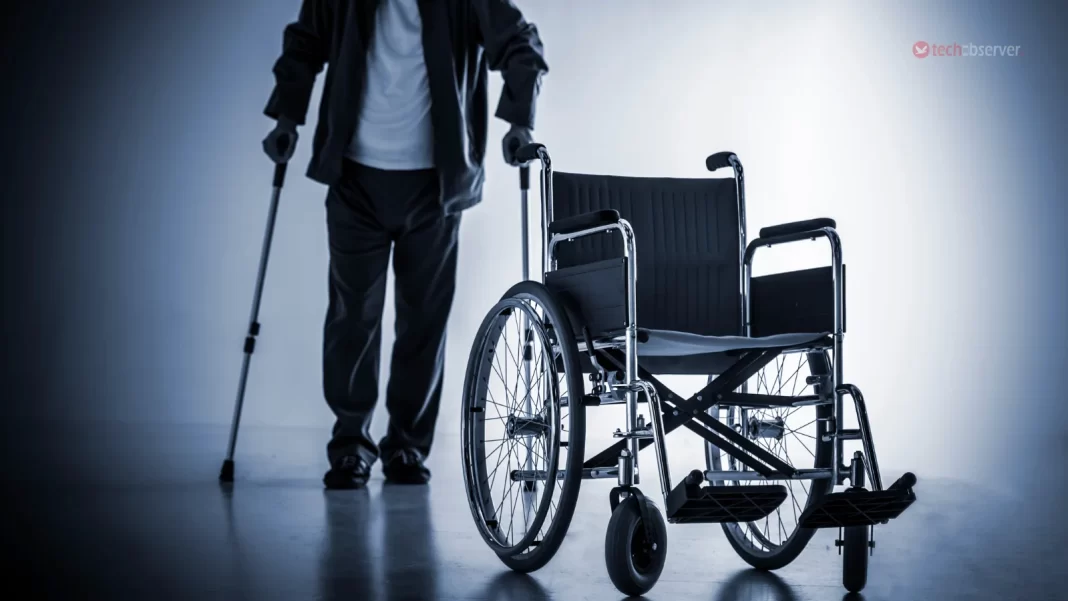

India is home to one of the world’s largest populations of persons with disabilities. According to the National Institute for the Empowerment of Persons with Disabilities, the country has taken significant legislative steps over the past decade to promote inclusion. One of the most important milestones was the enactment of the Rights of Persons with Disabilities (RPwD) Act, 2016. The Act recognises 21 categories of disabilities and guarantees equal opportunities in education and employment through reservations and reasonable accommodation.
Despite these legal protections, many talented students with disabilities continue to face barriers in pursuing careers in medicine and allied health sciences. The challenge is not a lack of ability or ambition; it is the absence of accessible systems, supportive infrastructure and assistive technology that enable students to learn, train and practise on an equal footing.
India’s healthcare system, missing its own voices
Medical education is expected to produce compassionate, competent professionals capable of serving diverse communities. Yet the healthcare system often excludes individuals who possess firsthand experience of disability. A 2025 study by Indian Journal of Medical Ethics highlights that despite progressive legislation, medical education in India continues to create systemic barriers for students with disabilities. Admission policies have improved, but inclusion frequently ends at the classroom door. Students continue to encounter inaccessible campuses, inconsistent accommodation, limited faculty awareness and inadequate support during clinical training.




These barriers affect not only future doctors but also aspiring nurses, physiotherapists, psychologists, pharmacists, occupational therapists, laboratory professionals, public health experts, researchers and healthcare administrators.
Progress in disability rights
The RPwD Act, 2016, aligned with the United Nations Convention on the Rights of Persons with Disabilities (UNCRPD), mandates equality, accessibility, inclusive education and reasonable accommodation. Educational institutions are expected to remove barriers and provide individualised support so that students with disabilities can participate equally.
However, legislation alone cannot transform educational institutions. A recent study by the National Library of Medicine emphasises that healthcare professionals with disabilities contribute valuable insights into accessibility, communication and patient care. Building an inclusive medical education system therefore requires much more than reserved admissions. It demands accessible infrastructure, inclusive curricula, faculty training, adaptive technologies, institutional commitment and a culture that values diversity.
Persistent barriers in medical education
Medical education presents unique challenges because it combines rigorous academic learning with practical clinical training. Students with disabilities frequently encounter obstacles including inaccessible classrooms, laboratories, hostels and transportation; clinical wards that are difficult to navigate; digital learning platforms that are incompatible with screen readers or assistive software; educational videos without captions; inaccessible assessments; limited faculty awareness of inclusive teaching practices; and assumptions that disability is incompatible with clinical competence.
Why access to assistive technology matters
Assistive technology is often associated with mobility aids or rehabilitation devices. According to UNICEF’s 2022 Global Report on Assistive Technology, more than 2.5 billion people worldwide require one or more assistive products, including mobility devices, hearing technologies, communication tools and digital accessibility solutions.
Within healthcare education, assistive technology functions as a bridge between disability and professional participation. It enables students and healthcare professionals to access medical textbooks and research literature, participate in lectures and laboratory sessions, communicate effectively with patients and colleagues, use electronic medical records and diagnostic systems, complete assessments, engage in clinical decision-making, conduct research and perform essential professional responsibilities safely and independently.
Rather than replacing competence, assistive technology enables competence to be demonstrated through accessible pathways.
Assistive technology across healthcare careers
A 2023 study by the World Health Organization highlights that healthcare professionals around the world with sensory and physical disabilities have successfully completed medical education using adaptive technologies, digitally connected medical devices, communication tools and accessible clinical equipment.
Healthcare is an interconnected ecosystem comprising doctors, nurses, pharmacists, physiotherapists, occupational therapists, psychologists, laboratory professionals, researchers and public health specialists. Every discipline offers opportunities where technology can remove barriers while maintaining professional standards and patient safety.
Medicine
Medical students and physicians can use screen readers, optical character recognition (OCR), text-to-speech software, accessible electronic medical records, AI-powered image description tools, speech recognition software and adaptive diagnostic devices to access information, interpret clinical data and communicate effectively. Artificial intelligence is further expanding accessibility by enabling document interpretation, conversational access to medical literature and automated image descriptions.
Nursing
Nursing has traditionally been viewed as physically demanding, leading to misconceptions about the abilities of nurses with disabilities. However, modern assistive technologies, including electronic documentation systems, voice-enabled charting, patient-lifting equipment, accessible monitoring devices, hearing technologies, communication tools and ergonomic workplace adaptations, allow many nursing responsibilities to be performed effectively while maintaining patient safety.
Allied health professions
Assistive technologies also support physiotherapists, occupational therapists, pharmacists, laboratory professionals, psychologists, researchers and public health practitioners through adaptive laboratory equipment, accessible software, communication technologies, ergonomic workstations and digital accessibility solutions.
Policy priorities for an inclusive healthcare workforce
A recent study by Journal of the Epidemiology Foundation highlights that access to assistive technology in India remains fragmented, with limited availability across healthcare institutions and inadequate awareness of existing support schemes. The need for action is becoming increasingly urgent.
According to the World Health Organization (WHO), billions of people worldwide require assistive products, yet access remains severely limited in many low- and middle-income countries. For India, where demand for skilled healthcare professionals continues to grow, enabling talented students with disabilities to complete medical and allied health education represents an opportunity to strengthen the healthcare workforce while advancing equity and innovation.
By the numbers
Key figures from this story- 2.5 billion
- People worldwide requiring assistive products per UNICEF
- 21
- Categories of disabilities recognised under RPwD Act 2016
Government agencies and regulators, including the National Medical Commission (NMC), the Ministry of Health and Family Welfare, the Ministry of Social Justice and Empowerment and state governments, must move from legislative intent to measurable implementation. This includes strengthening accessibility standards across medical colleges, investing in assistive technologies and inclusive digital infrastructure, building faculty capacity through disability-inclusive training and establishing robust monitoring mechanisms to ensure that students with disabilities receive consistent and meaningful support throughout their education and clinical training.
Building an inclusive healthcare workforce
India’s ambition to strengthen its healthcare system cannot be achieved while excluding talented individuals with disabilities. Assistive technology should no longer be viewed merely as a rehabilitation tool. It is an educational resource, a workforce enabler and a catalyst for inclusion. Combined with accessible infrastructure, supportive institutional policies, faculty training and Universal Design, it empowers future healthcare professionals to demonstrate their competence and contribute meaningfully to patient care.
The future of healthcare depends not only on medical innovation but also on ensuring that every capable individual has the opportunity to participate. When disability is met with accessible technology rather than inaccessible systems, healthcare gains skilled professionals, patients receive more inclusive care and society moves closer to true equity.
The author is President, Narayan Seva Sansthan. Views are personal.


