






Key Points
- MTNL recorded 51 dropped calls out of 346 compared to single digits for private operators
- Reliance Jio recorded highest 5G download speed at 141.28 Mbps across Delhi metro routes
- TRAI tested 490 km of metro routes across 15 lines including Namo Bharat RRTS
State-run MTNL recorded 51 dropped calls out of 346 successful connections during a mobile network quality assessment across Delhi’s metro routes, the Telecom Regulatory Authority of India (TRAI) said on Monday (15 June 2026), significantly underperforming private operators who logged single-digit call drops on the same stretches.
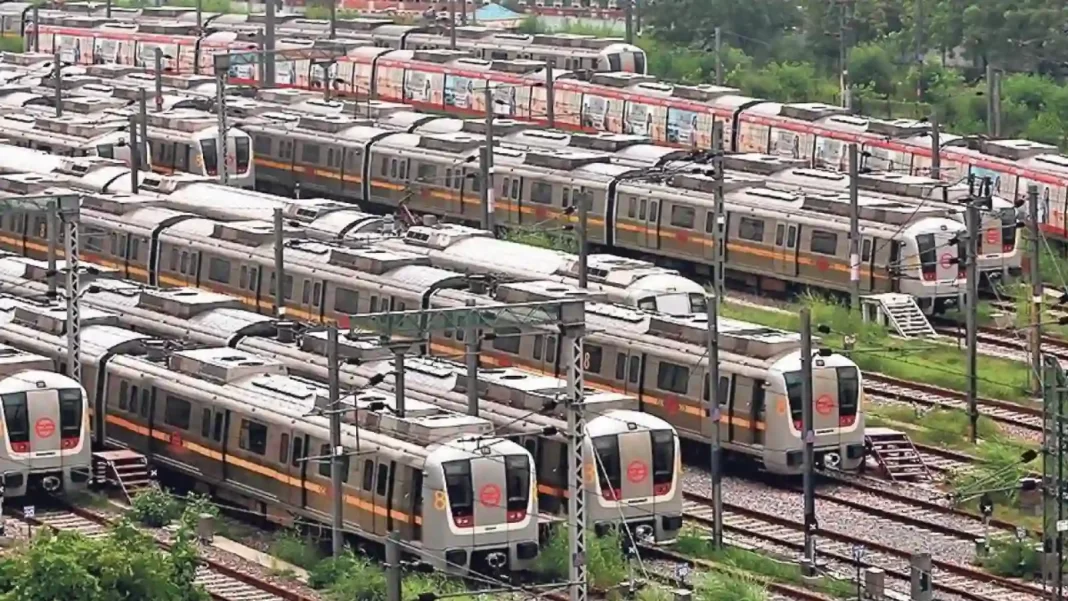
The regulator’s Independent Drive Test (IDT), conducted between 1 and 4 April 2026 and on 14 April 2026, covered 490 km across 15 metro lines operated by Delhi Metro Rail Corporation, Noida Metro Rail Corporation and National Capital Region Transport Corporation. Private operators Bharti Airtel, Reliance Jio and Vodafone Idea recorded five, eight and ten dropped calls respectively out of approximately 490 successful calls each.



By the numbers
Key figures from this story- 51 dropped calls
- MTNL call drops versus single digits for private operators
- 141.28 Mbps
- Jio 5G download speed versus MTNL's 4.30 Mbps
- 490 km
- Metro routes tested across 15 lines in Delhi
Data speeds show stark gap between MTNL and private operators
The performance gap extended to data services, where MTNL’s 4G network delivered average download speeds of 4.30 megabits per second (Mbps) — a measure of how quickly data moves from the network to a user’s device. In contrast, Reliance Jio’s 5G network recorded 141.28 Mbps, Airtel’s 5G delivered 81.72 Mbps and Vodafone Idea’s 5G managed 23.94 Mbps.
For upload speeds — measuring how quickly data moves from a user’s device to the network — MTNL recorded 1.84 Mbps against Airtel’s 25.98 Mbps, Jio’s 19.99 Mbps and Vodafone Idea’s 16.96 Mbps.
MTNL, which does not yet operate a 5G network in Delhi, was tested only on 4G. The three private operators were assessed on their 5G networks, giving them a technological advantage in the speed comparisons. However, the call drop metric applies across all network generations and showed MTNL’s drop rate at roughly 15 per cent compared to around one to two per cent for competitors.
Coverage gaps reveal network reach challenges
TRAI’s testing equipment captured signal strength samples at regular intervals along the metro routes. A sample is considered to have poor signal strength if it falls below specific thresholds: −110 decibels referenced to a milliwatt (dBm) for 5G and 4G, −90 dBm for 3G and −85 dBm for 2G. Below these levels, voice calls may fail to connect or data services become unusable.
MTNL recorded 20,768 samples with poor signal strength out of 43,220 total samples — a coverage gap of roughly 48 per cent. Airtel logged 1,280 poor samples out of 52,666 (2.4 per cent), Jio recorded 1,297 out of 52,325 (2.5 per cent) and Vodafone Idea registered 1,490 out of 52,753 (2.8 per cent).
The tests covered metro lines including the Blue Line from Dwarka Sector-21 to Noida Electronic City, the Yellow Line from Samaypur Badli to Millennium City Centre, the Violet Line from Ballabhgarh to Kashmere Gate, the Magenta Line, Pink Line, Red Line, Green Line, Grey Line, Orange Line, Aqua Line and the Namo Bharat Regional Rapid Transit System corridor between Delhi and Meerut.
What the metrics mean for daily commuters
Call Setup Success Rate (CSSR) measures what proportion of dialled calls successfully connect to the network. Drop Call Rate (DCR) measures how many connected calls fail before either party ends the call. For the millions of commuters who travel Delhi’s metro network daily, these metrics directly affect their ability to make voice calls underground or during transit.
Data throughput — both download and upload — determines how quickly commuters can stream video, send files or use data-intensive applications. Latency, the delay between sending a request and receiving a response, affects real-time applications like video calls. TRAI’s tests measured these parameters across all network technologies available from each operator.
The regulator said it had shared findings with all four telecom service providers for necessary action. Detailed reports, including interactive maps showing exact locations of dropped calls and coverage gaps, are available on TRAI’s website. Some call drops occurring in underground metro sections could not be plotted on the maps, TRAI noted.
TRAI’s Delhi regional office supervised the testing, which used SIM cards from all operators on advanced test handsets running live voice and data sessions. The results represent network performance on the specific dates and routes tested and may vary at other times or locations.
Your Questions, Answered
Which telecom operator had the most dropped calls on Delhi Metro routes?
MTNL recorded 51 dropped calls out of 346 successful connections, compared to Airtel's five, Jio's eight and Vodafone Idea's ten dropped calls out of approximately 490 calls each.
What was the fastest mobile network on Delhi Metro according to TRAI?
Reliance Jio's 5G network recorded the highest average download speed at 141.28 Mbps, followed by Airtel at 81.72 Mbps and Vodafone Idea at 23.94 Mbps. MTNL's 4G network delivered 4.30 Mbps.
How many metro routes did TRAI test for mobile network quality?
TRAI tested 15 metro lines covering 490 km, including routes operated by Delhi Metro Rail Corporation, Noida Metro Rail Corporation and National Capital Region Transport Corporation, plus the Namo Bharat RRTS corridor.
When did TRAI conduct the Delhi Metro network quality tests?
The Independent Drive Tests were conducted between 1 and 4 April 2026 and on 14 April 2026, supervised by TRAI's Delhi regional office.


