





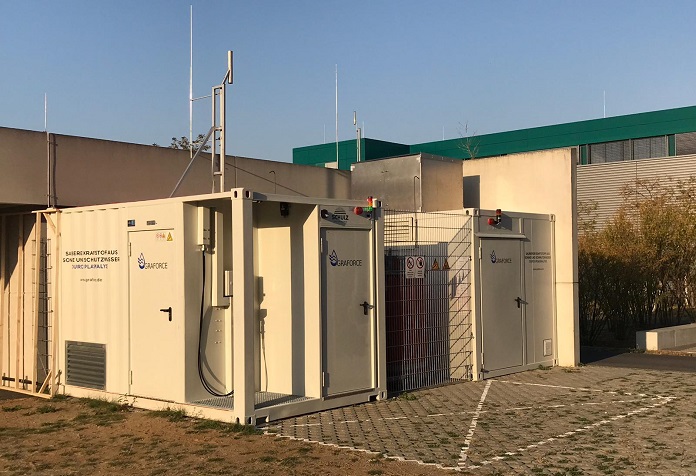

The German technology company Graforce has introduced a unique technology: Plasmalysis saves resources in its highly efficient generation of hydrogen from industrial waste water. Mixing in biogas produces hydrogen-enriched compressed natural gas (HCNG) – a cost-effective, environmentally friendly fuel for vehicles that also generates electricity and heat. The technology not only converts wastewater pollutants into valuable energy, but also reduces emissions (CO2, CO, HC) by 30 to 60 percent. Nitrogen oxide emissions are also reduced by up to 60 percent. Graforce’s partners include carmaker Audi and Berliner Wasserbetriebe.
“The technology we’ve developed is capable of cleaning wastewater and producing a low-cost, low-emission fuel from it,” says Graforce founder Dr. Jens Hanke at today’s launch of a demonstration plant in Berlin. “This lets us contribute to solving two pressing problems at once: air pollution and wastewater treatment.”
Cost-effective fuel with lower emissions
Graforce produces hydrogen using the plasmalysis process in its demonstration plant in Berlin. The process uses electricity to split wastewater obtained from biogas, sewage treatment and industrial plants into oxygen and hydrogen. Mixing hydrogen with biogas produces HCNG, which can be used as fuel in natural gas vehicles and in block heating and gas power plants. Only purified water and oxygen remain as waste products. Hydrogen production using plasmalysis is 50-60% cheaper than with conventional processes.



Audi tests wastewater use of methane production with e-fuels
German carmaker Audi has also been committed its reliance for many years to alternative, synthetic fuels. One of the biggest challenges to e-fuel production is the wastewater produced by biogas plants. It requires very expensive cleaning or disposal. Integrating plasmalysis technology into Audi’s e-fuel plants repurposes the wastewater into hydrogen production while purifying it at the same time. This enables Audi’s systems to be used more efficiently. “Graforce’s plasmalysis is an important contribution to low-emission fuel production while boosting the economy and efficiency of biogas and power-to-gas plants,” explains Dr. Hermann Pengg, Head of Project Management for Renewable Fuels at Audi and CEO of Audi Industriegas GmbH.


