






Key Points
- E-Samudra platform launched to digitise all maritime services through single window
- India's active seafarer workforce grew from 1.03 lakh in 2013 to 3.23 lakh in 2025
- DGMA coordinated repatriation of over 4,000 stranded Indian seafarers during geopolitical disruptions
The Centre has launched E-Samudra, a digital platform that brings together services for seafarers, shipping companies and ports under a single window, marking a shift towards paperless maritime administration in India.
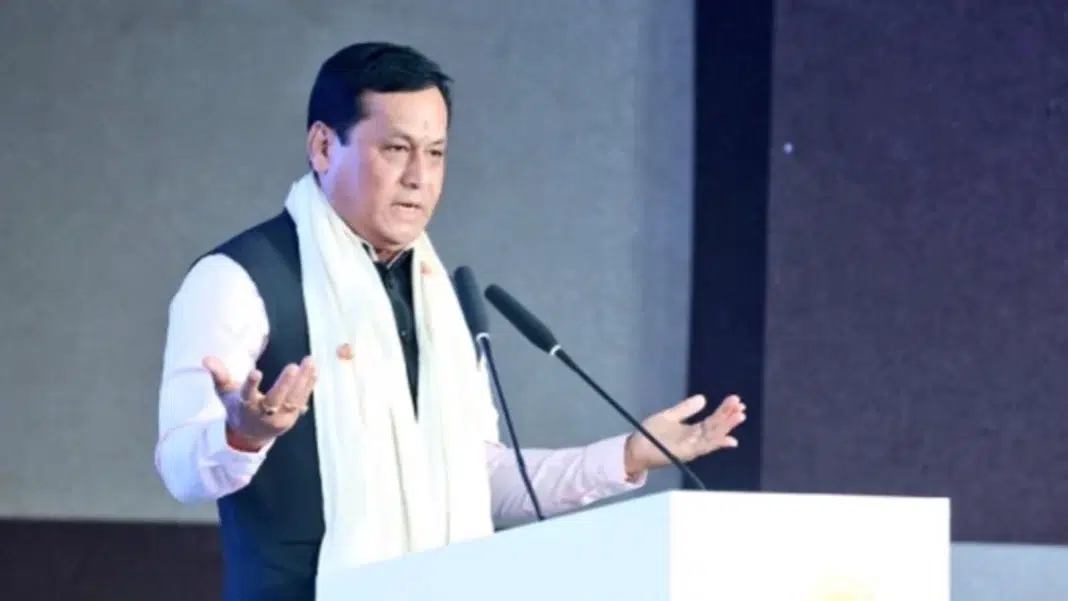
Sarbananda Sonowal, Union minister for Ports, Shipping and Waterways, inaugurated the platform on Saturday (8 August) at an event in Mumbai organised by the Directorate General of Maritime Administration (DGMA), the regulatory body that oversees merchant shipping and seafarer certification in India.



The platform will offer end-to-end digital workflows for maritime services, including online payments, real-time application tracking and digitally issued certificates. Seafarers currently need to visit physical offices across multiple cities to complete paperwork for certification, employment agreements and welfare claims.
“E-Samudra is not merely a technology platform; it is a significant step towards making maritime governance simpler, more transparent and more stakeholder-centric,” Sonowal said at the event.
Seafarer workforce
India’s active seafarer workforce has grown from approximately 1.03 lakh in 2013 to more than 3.23 lakh in 2025, according to the ministry. The expansion has increased pressure on administrative systems designed for a smaller maritime workforce.
The country has emerged as the second-largest supplier of seafarers globally, the minister said, adding that India is working to become the largest supplier. India has also become the leading ship recycling destination worldwide and aims to rank among the top five shipbuilding nations.
Vijay Kumar, secretary, Ministry of Ports, Shipping and Waterways, said the government’s maritime policy now rests on three pillars: the Merchant Shipping Act, 2025, which formally recognises seafarers as key workers entitled to specific protections; the Maritime Amrit Kaal Vision 2047, a long-term development roadmap; and a principle of reduced bureaucratic intervention.
“E-Samudra will bring maritime services into a single digital window with end-to-end workflows, online payments, real-time tracking and digitally issued certificates. Our objective is not merely to put processes online, but to make them predictable, transparent and time-bound,” Kumar said.
E-Samudra initiatives
Alongside E-Samudra, the ministry announced several related initiatives. These include e-NAVIK, a 24-hour grievance redressal system for seafarers that has recently gone live; a forthcoming Seafarer Tracking Dashboard to monitor the location and status of Indian seafarers on vessels worldwide; and the Digital Seafarers Employment Agreement, known as d-SEA, which will replace paper-based employment contracts.
The Seafarers Welfare Fund Society, which provides financial assistance to seafarers and their families, will also receive enhanced funding under the new framework.
Shyam Jagannathan, director general of Maritime Administration, said the platform represents a transition from office-based administration to what officials describe as faceless governance.
“E-Samudra transforms maritime administration from a physical office-based model into an integrated digital ecosystem. It represents a transition towards Digital First and Faceless Governance, ensuring that a seafarer onboard a vessel can access government services as easily as someone sitting ashore,” Jagannathan said.
By the numbers
Key figures from this story- 3.23 lakh
- Active Indian seafarers as of 2025
- 4,000+
- Stranded seafarers repatriated by DGMA
- 16,000+
- Calls monitored during geopolitical disruptions
The ministry also highlighted its response to geopolitical disruptions affecting global shipping routes. DGMA monitored more than 16,000 calls, handled over 40,000 communications and coordinated the safe repatriation of more than 4,000 stranded Indian seafarers through joint efforts with the Ministry of External Affairs, Indian missions abroad, the Indian Navy and shipowners.
Officials also announced two welfare programmes: Sagar Mein Yog, which promotes physical and mental wellbeing of seafarers through structured wellness initiatives, and Sagar Mein Samman, aimed at increasing opportunities for women in maritime careers. The ministry said the number of women seafarers has increased significantly in recent years, though it did not provide specific figures.
The event brought together representatives from the maritime industry, seafarer organisations, recruitment agencies, maritime training institutes, shipowners and government agencies. Sonowal interacted with cadets and young maritime professionals, discussing recruitment practices, regulatory compliance and career pathways in the sector.
Your Questions, Answered
What is E-Samudra and what services does it offer?
E-Samudra is a digital platform launched by the Ministry of Ports, Shipping and Waterways that integrates services for seafarers, shipping companies and ports under a single window. It offers online payments, real-time application tracking and digitally issued certificates for maritime services.
How many seafarers does India have and what is the growth trend?
India's active seafarer workforce has grown from approximately 1.03 lakh in 2013 to more than 3.23 lakh in 2025. India is currently the second-largest supplier of seafarers globally and aims to become the largest.
What is the e-NAVIK system announced alongside E-Samudra?
e-NAVIK is a 24-hour grievance redressal system for seafarers that allows them to register complaints and seek assistance at any time. The system has recently been launched as part of the broader maritime digitisation initiative.
How did DGMA support stranded seafarers during geopolitical disruptions?
DGMA monitored over 16,000 calls, handled more than 40,000 communications and coordinated the repatriation of over 4,000 stranded Indian seafarers through joint efforts with the Ministry of External Affairs, Indian missions, the Indian Navy and shipowners.


