






Key Points
- Government R&D spending rose from 0.64 per cent of GDP in 2020-21 to 0.84 per cent in 2023-24
- Six major schemes worth over Rs 1.05 lakh crore fund AI, quantum, semiconductor and biotech research
- 29 technology innovation hubs established across India under NM-ICPS and NQM
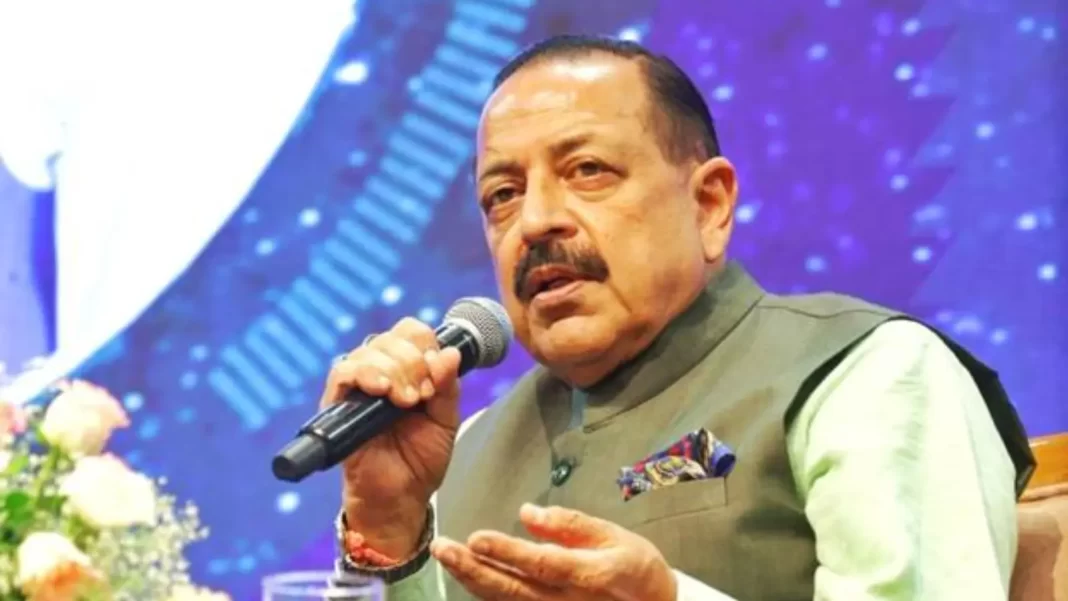
India’s gross expenditure on research and development has risen to 0.84 per cent of GDP in 2023-24, up from 0.64 per cent in 2020-21, with absolute spending more than tripling over the past decade, minister of state for science and technology Dr. Jitendra Singh told the Lok Sabha on Wednesday (12 August).
In response to a parliamentary question on research infrastructure and emerging technology investments, Singh said R&D expenditure in absolute terms increased from Rs 79,355.89 crore in 2013-14 to Rs 2,44,767.81 crore in 2023-24. The government is implementing six major schemes worth over Rs 1.05 lakh crore to promote research in artificial intelligence, quantum technology, semiconductors and biotechnology.



The largest allocation is the India Semiconductor Mission at Rs 76,000 crore, which covers semiconductor fabrication, packaging, design and ecosystem development. This is followed by the India AI Mission at Rs 10,371.92 crore and the Biotechnology Research Innovation and Entrepreneurship Development programme, called BioRIDE, at Rs 9,197 crore.
Quantum and deep tech
The National Quantum Mission has received Rs 6,003.65 crore for work on quantum computing, quantum communication, quantum sensing and metrology, and quantum materials and devices.
Four technology hubs have been established under this mission at IISc Bengaluru for quantum computing, IIT Madras for quantum communication, IIT Bombay for quantum sensing and metrology, and IIT Delhi for quantum materials and devices.
The Research, Development and Innovation Fund, a new initiative with an outlay of Rs 1 lakh crore, will focus on deep technologies including quantum computing, robotics, space, artificial intelligence, biotechnology, digital economy and energy security.
The National Mission on Interdisciplinary Cyber-Physical Systems has an allocation of Rs 3,660 crore covering AI, quantum technologies, robotics and cybersecurity.
Under the cyber-physical systems mission, 25 technology innovation hubs have been set up at institutions across the country. These include hubs for robotics and AI systems at IISc Bengaluru, cybersecurity at IIT Kanpur, digital healthcare at IIT Indore, artificial intelligence and machine learning at IIT Kharagpur, and computer vision at IIT Jodhpur.
Talent retention
Addressing concerns about brain drain and vacant scientist positions, Singh said the government operates several fellowship programmes to retain and attract research talent. These include the National Post-Doctoral Fellowship, Ramanujan Fellowship, INSPIRE Faculty Fellowship, Ramalingaswami Re-entry Fellowship and MK Bhan-Young Researcher Fellowship.
The VAIBHAV fellowship provides a platform for overseas scientists, including non-resident Indians, to conduct collaborative research at Indian institutions and universities. The Department of Science and Technology also supports research infrastructure through programmes such as the Fund for Improvement of S&T Infrastructure, known as FIST, and the Sophisticated Analytical Instrument Facilities.
By the numbers
Key figures from this story- 0.84%
- India's R&D spending as percentage of GDP in 2023-24
- Rs 2.44 lakh crore
- Absolute R&D expenditure in 2023-24
- Rs 76,000 crore
- India Semiconductor Mission outlay
On the question of whether the government planned to increase R&D spending to 2 per cent of GDP, Singh said the government continues to promote greater investment through enhanced public funding, increased private sector participation, philanthropic contributions and stronger industry-academia collaboration.
He cited the establishment of the Anusandhan National Research Foundation and the Research Development and Innovation Fund as key initiatives to catalyse private investment in research.
The 25 technology hubs span 14 states, with multiple hubs in Maharashtra, Delhi, Uttar Pradesh, Karnataka, Rajasthan, Telangana and West Bengal. Focus areas range from fintech at IIT Bhilai to underwater exploration at IIT Guwahati, agricultural technologies at IIT Ropar and positioning technologies at IIT Tirupati.
Your Questions, Answered
What is India's current R&D spending as a percentage of GDP?
India's gross expenditure on research and development reached 0.84 per cent of GDP in 2023-24, up from 0.64 per cent in 2020-21, according to the Department of Science and Technology's Research and Development Statistics 2025-26 report.
How much has India's R&D spending grown in absolute terms?
India's R&D expenditure more than tripled from Rs 79,355.89 crore in 2013-14 to Rs 2,44,767.81 crore in 2023-24 in absolute terms.
What are the major government schemes funding emerging technology research?
Six major schemes include the India Semiconductor Mission at Rs 76,000 crore, India AI Mission at Rs 10,371.92 crore, BioRIDE at Rs 9,197 crore, National Quantum Mission at Rs 6,003.65 crore, NM-ICPS at Rs 3,660 crore, and the RDI Fund at Rs 1 lakh crore.
How many technology innovation hubs has India established?
India has established 29 technology hubs, comprising 25 under the National Mission on Interdisciplinary Cyber-Physical Systems and 4 under the National Quantum Mission, spread across institutions in 14 states.


