





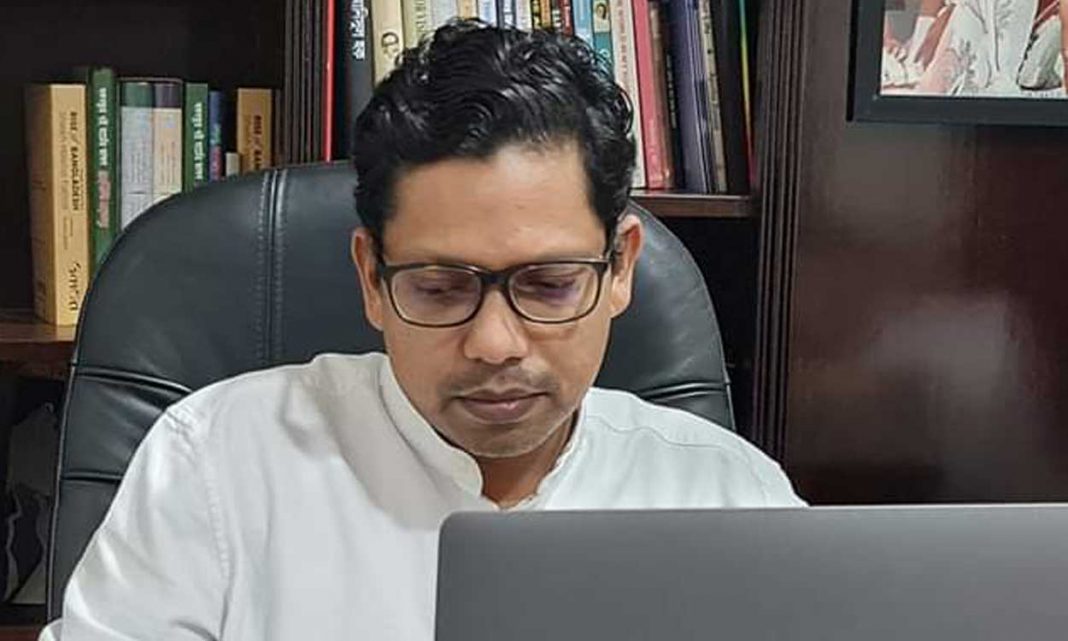

Dhaka — Japan has shown interest in building smart cities in Bangladesh, said its ambassador to Dhaka Ito Naoki. The Japanese ambassador expressed interest in a bilateral meeting with State Minister for ICT Zunaid Ahmed Palak at the Information and Communication Technology (ICT) Department on Sunday.
Ito Naoki said: “Japan is keen to work with Bangladesh on smart city development. We are contributing in many areas including infrastructure development in Bangladesh and Japan is now interested in developing smart cities.”
Ambassador Ito emphasized the importance of working together to further expand cooperation between the two countries through the development of strategic partnership between Japan and Bangladesh.




He said: “ICT is now the main driving force of the economy. Japan International Co-operative Agency (JICA) can further develop and enrich the master plan for Bangladesh 2041 by assisting in technology-based human resource development.”
During the meeting, State Minister for ICT Zunaid Ahmed Palak presented some proposals to the Japanese Ambassador to work jointly in the country’s IT sector.
Among them are: Memorandum of Understanding with Digital Security Agency on Cyber Security for Information Sharing, Establishment of Japan-Bangladesh IT University under Hi-Tech Park, E-Waste Management Plant through Japanese Technical Experts, Sheikh Hasina Inc. Establishment of Leadership Academy, making e-governance more sustainable, arranging Bangladesh-Japan Digital Summit is one of them.
Appreciating the interest in working for the development of Bangladesh Smart City, Palak said the Prime Minister’s dream program – ‘My Village, My City’ – that is, Japan can help ensure all modern facilities to the rural people.
“Not only the development of smart cities, we can make the whole of Bangladesh a smart country and Japan can help in health, education, agriculture, automobiles and other areas,” Palak said.
“We have already sent a proposal to ERD to set up a Bangladesh-Japan ICT University to meet the requirements for performing Industrial Revolution 4.0 and Society 5.0,” he added.


